Tuesday, November 1, 2011

Flexbone and the B back, Teaching the Stance and Start


Ok, so you've got your B back's, now how to teach them to do what you need them to do...get off the ball quick and run to daylight based on quick reads.  So how to do this?  It's not complicated, but like anything in football, you must start off with good fundamentals, or the rest of the teaching will be flawed.

Alignment
The B back aligns directly behind the QB with his down hand approximately six feet from the heels of the QB.  I use this rule, because it's a shorter distance to estimate for the B back.  A lot of coaches say put the heels of the B back at five yards from the tip of the ball, I'd rather use the hand method as all of this is "seen" by the B back.  The key element here is that the mesh happens FAST.  The QB cannot be waiting on the B back in the mesh, or "bubbling" around the QB in the mesh, as this causes problems with the pitch phase of the triple option. 

Stance
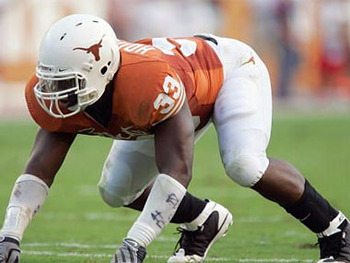
The stance of the B back is the critical part of being able to utilize your players assets you found utilizing the drills we talked about in an earlier post.  The stance of the B back is typical to that of a defensive end in a four man front.  To start, the B back has his feet shoulder width or even slightly narrower.  They can drop their off foot back as well if need be.  Now, I've even had them get in a four-point stance if they felt more comfortable doing so.  Not what I'd do every time, but there are times when a B back wants to "pop" up out of his stance rather than exploding forward that going to the four-point will help this.  Anyhow, once the feet are where you want them, have the player rock forward and put a large majority of his weight on his down hand  The buttocks should be higher than the head and the back is straight.  Due to arm length, some kids buttocks will not be above their heads, it will be parallel with it, and this is ok.  What you don't want is a kid that has his buttocks below his head as this will make him "pop" up, or become what I always labeled a "Jack in the Box".  Anyhow, you have just effectively taught the prototypical B back stance! 


Start
The start is very important to the B back, just like any other position in football.  The B back will use a short six inch power step on the snap, stepping in the direction of the play.  During this step the shoulders will slightly elevate, but hey should not come straight up.  Once the first step is in the ground, the second step will be utilized to gain ground toward the point of attack.  I always used the middle of the guard as the aiming point on the inside veer (ISV), so that was where we were pointed once the second step was in the ground.  Sometimes you had to correct B backs that were going forward and on the second step changing direction to get in the mesh.  This is not good as the QB can bump into or connect too early with the B back, thereby making the play not as effective.  The B back and QB should mesh as seamlessly as possible.

In the Mesh
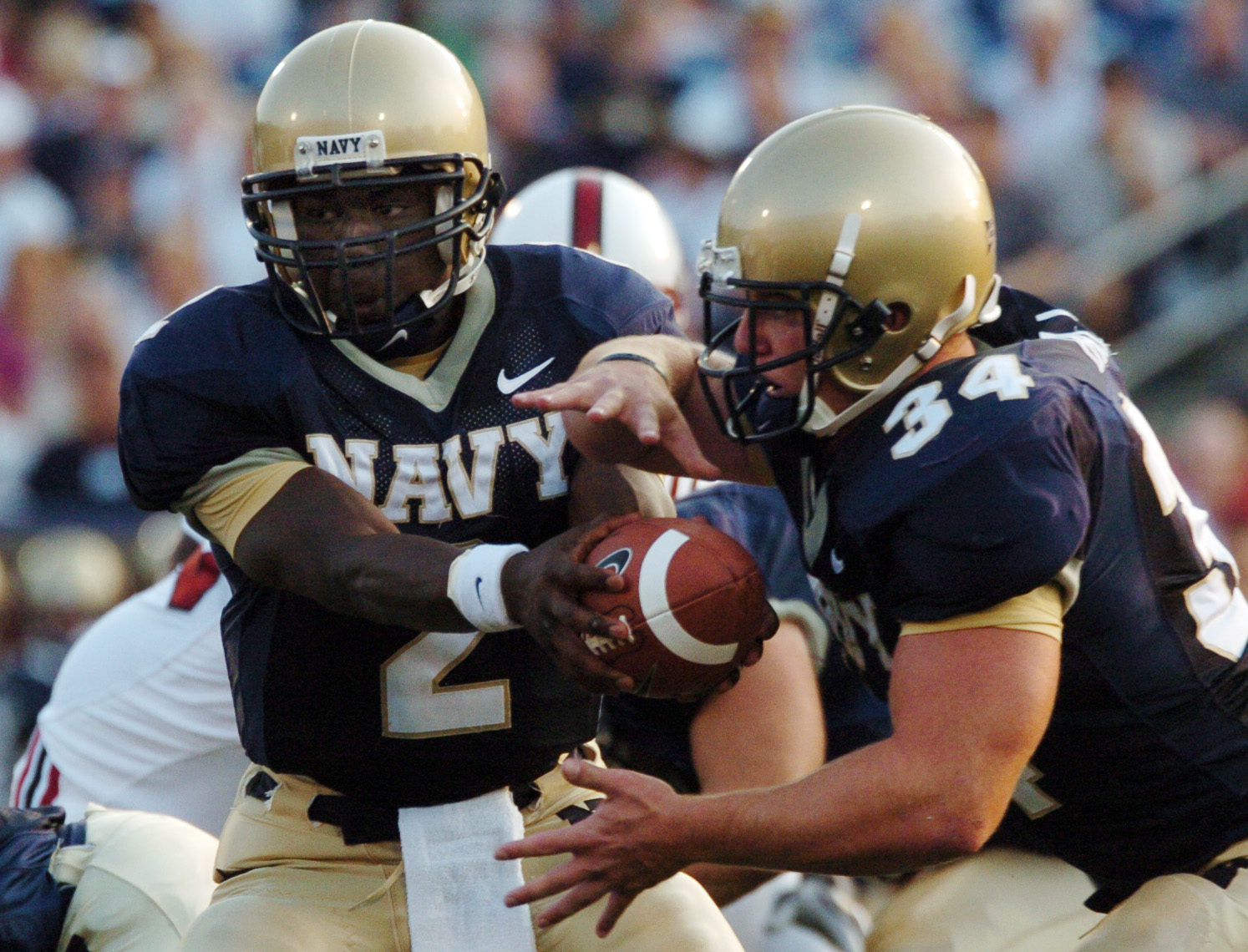
Once the B back is in the mesh, or if you are a no mesh team, once he's on his veer path, the B back's pads should remain low, rising no more than 12 inches or so from their original position.  The B back makes the traditional pocket that running back's (RB's) do with his inside arm up.  In a ride and decide system, the B back will feel the QB seat the ball in his belly.  He MUST NOT clamp down at this point, however as the QB is still in the process of making his dive read.  Once the B back feels the QB apply pressure to the B back's abdomen (this means the QB has straightened his arm and has stopped the riding process), the B back must clamp down on the football.  In the milliseconds while the read is happening the B back should be reading the guard's block to his side, especially if running the ISV to a three technique.  This allows the B back to cut or run to daylight when the QB gives the football.  Once the football is secure, the B back then makes his cut and gets in what I call the "crease".


If you are a no mesh, or Point Method guy, the B back, while on his crease path, makes his normal pocket for the QB.  Once he feels the football, he clamps down on it immediately as he knows if the QB leaves the ball out there, by the time the B back gets the football, it's his.  The same reads apply for the B back in that he should be reading the guard's block as to where to cut to once he has the football given to him.

In both mesh and no mesh systems, if the QB does not give the ball, the B back should be in a great position to absorb the hit coming from the handoff key (HOK).  The back should look to take this tackle on low and hard, and even step into the tackle if possible.  This will keep the HOK occupied so he cannot slip off and play both the QB and the B back.  The B back should keep his arms in front of him, as though he got the handoff and should barrel ahead into the tackle.  If the QB misreads the play, the B back should run through the crease and look for the first opposite colored jersey he sees and block it.


Running with the Football
Once the ball is given, the B back is not a prototypical runner at this point.  He must make his cut and stick with his decision.  "Dancers" are not allowed at the B back position.  These guys must be able to make a quick cut and go.  This is less imperative if you do not run ISV at a three technique as more than likely, the B back will be able to stay on track, and run the crease.  One effective technique on both ISV and midline is to have the B back "bend" back in behind the HOK, as there is a natural void there due to the HOK not squeezing down to take the B back. 


Please...no dancers...

The B back should keep two hands on the football at all times when in traffic.  If he breaks out, then he can tuck the ball away with one hand.  This is important as the B back's first five to ten yards are going to be in the belly of the defense where there are plenty of opportunities to get hit and fumble the football.  Another coaching point is the B back NEVER looks back!  If he feels the QB pull the ball and knows it was a fumble, he must keep running.  This does two things, it gets a body out of the way so the QB can find and jump on the football, and it looks, to the HOK, like the B back still has the football.  This part is sometimes easier said than done, but by explaining to your B back's they are like a missile on every play, they should get the idea that they are to not look back once they take off.

Problems and Coaching Points
  1. Mesh is too slow/QB bubbling off mesh- Move the B back up closer to the QB.  Too close and you don't have a good mesh angle.  If you have to move the B back more than a foot, he should be playing offensive tackle. 
  2. Mesh too quick, QB not getting a good read- While I argue this is a moot point and your QB should learn to read it quicker, you can back the B back up a bit, but again, one foot is the mark.  If moving him back doesn't work, find you a new QB.
  3. B back bending into the mesh- This happens a lot with younger, more inexperienced players for some reason.  Look at the B back's feet and make sure he's stepping with his playside foot first in the direction of the aiming point.  Sometimes younger players rely on their dominant hand or foot and you will find that they tend to run the play good in one direction but not the other.  If this is the case, rep your back doing it do his weak side twice as much to his strong side.
  4. Ball being placed too low on B back's body- This comes from your B back running upright.  One good place to rep your B back's are in the linemen chutes (if you have them).  This teaches them to come out low and hard, with the best application being a "battleground chute". 
  5. Fumbles in the mesh- This problem can go two ways, as it could be your QB.  The first thing to look at is, does the B back seem to be pulling or tugging at the ball in the mesh.  If so, he's not understanding what he's supposed to be feeling.  Mesh drill is a good way to work on this, but slow it down if having problems.  Let the B back know it's going to be a give or a pull and have the QB follow your instructions so they can both feel how each is supposed to feel. 
  6. B back off track- This happens quite a bit, even when utilizing a fire hose for your linemen splits.  The best thing is to build a "Mesh Board" as I call it.  It's two pressure treated 2x6's made in a V.  They are attached at the V with a bolt, two washers and a wing nut (for easy removal and storage).  About midway up is a piece of chain, measured to the right length to accommodate your linemen's splits.  These boards are only four feet long and when laid on the ground form a "V".  The B back places his hand in the middle of the V (see mesh drill video above) and runs along the board to stay on course. 
  7. B back stops on contact- There are going to be misreads, or even close reads where the B back is going to get hit or partly hit by the HOK.  If the B back is stopping on contact, work the gauntlet drill continuously or work the veer drill with an offensive tackle and defensive linemen to simulate "live" situations.  This may also be the player, and you may need to reevaluate whether or not this player is suited to play B back.
The B back's initial alignment, stance and get off are imperative to the success of the triple option in the Flexbone offense.  Do not leave these details alone, and "hope" they will get coached.  If you see problems arising, work on them immediately as the success of your offense hangs in the balance!


For the next installment, I will discuss the B back and his role in the running game in the Flexbone offense.


1. Fear the Veer...check!

Duece

Flexbone and the B back, Teaching the Stance and Start


Ok, so you've got your B back's, now how to teach them to do what you need them to do...get off the ball quick and run to daylight based on quick reads.  So how to do this?  It's not complicated, but like anything in football, you must start off with good fundamentals, or the rest of the teaching will be flawed.

Alignment
The B back aligns directly behind the QB with his down hand approximately six feet from the heels of the QB.  I use this rule, because it's a shorter distance to estimate for the B back.  A lot of coaches say put the heels of the B back at five yards from the tip of the ball, I'd rather use the hand method as all of this is "seen" by the B back.  The key element here is that the mesh happens FAST.  The QB cannot be waiting on the B back in the mesh, or "bubbling" around the QB in the mesh, as this causes problems with the pitch phase of the triple option. 

Stance
The stance of the B back is the critical part of being able to utilize your players assets you found utilizing the drills we talked about in an earlier post.  The stance of the B back is typical to that of a defensive end in a four man front.  To start, the B back has his feet shoulder width or even slightly narrower.  They can drop their off foot back as well if need be.  Now, I've even had them get in a four-point stance if they felt more comfortable doing so.  Not what I'd do every time, but there are times when a B back wants to "pop" up out of his stance rather than exploding forward that going to the four-point will help this.  Anyhow, once the feet are where you want them, have the player rock forward and put a large majority of his weight on his down hand  The buttocks should be higher than the head and the back is straight.  Due to arm length, some kids buttocks will not be above their heads, it will be parallel with it, and this is ok.  What you don't want is a kid that has his buttocks below his head as this will make him "pop" up, or become what I always labeled a "Jack in the Box".  Anyhow, you have just effectively taught the prototypical B back stance! 


Start
The start is very important to the B back, just like any other position in football.  The B back will use a short six inch power step on the snap, stepping in the direction of the play.  During this step the shoulders will slightly elevate, but hey should not come straight up.  Once the first step is in the ground, the second step will be utilized to gain ground toward the point of attack.  I always used the middle of the guard as the aiming point on the inside veer (ISV), so that was where we were pointed once the second step was in the ground.  Sometimes you had to correct B backs that were going forward and on the second step changing direction to get in the mesh.  This is not good as the QB can bump into or connect too early with the B back, thereby making the play not as effective.  The B back and QB should mesh as seamlessly as possible.

In the Mesh
Once the B back is in the mesh, or if you are a no mesh team, once he's on his veer path, the B back's pads should remain low, rising no more than 12 inches or so from their original position.  The B back makes the traditional pocket that running back's (RB's) do with his inside arm up.  In a ride and decide system, the B back will feel the QB seat the ball in his belly.  He MUST NOT clamp down at this point, however as the QB is still in the process of making his dive read.  Once the B back feels the QB apply pressure to the B back's abdomen (this means the QB has straightened his arm and has stopped the riding process), the B back must clamp down on the football.  In the milliseconds while the read is happening the B back should be reading the guard's block to his side, especially if running the ISV to a three technique.  This allows the B back to cut or run to daylight when the QB gives the football.  Once the football is secure, the B back then makes his cut and gets in what I call the "crease".


If you are a no mesh, or Point Method guy, the B back, while on his crease path, makes his normal pocket for the QB.  Once he feels the football, he clamps down on it immediately as he knows if the QB leaves the ball out there, by the time the B back gets the football, it's his.  The same reads apply for the B back in that he should be reading the guard's block as to where to cut to once he has the football given to him.

In both mesh and no mesh systems, if the QB does not give the ball, the B back should be in a great position to absorb the hit coming from the handoff key (HOK).  The back should look to take this tackle on low and hard, and even step into the tackle if possible.  This will keep the HOK occupied so he cannot slip off and play both the QB and the B back.  The B back should keep his arms in front of him, as though he got the handoff and should barrel ahead into the tackle.  If the QB misreads the play, the B back should run through the crease and look for the first opposite colored jersey he sees and block it.


Running with the Football
Once the ball is given, the B back is not a prototypical runner at this point.  He must make his cut and stick with his decision.  "Dancers" are not allowed at the B back position.  These guys must be able to make a quick cut and go.  This is less imperative if you do not run ISV at a three technique as more than likely, the B back will be able to stay on track, and run the crease.  One effective technique on both ISV and midline is to have the B back "bend" back in behind the HOK, as there is a natural void there due to the HOK not squeezing down to take the B back. 


Please...no dancers...

The B back should keep two hands on the football at all times when in traffic.  If he breaks out, then he can tuck the ball away with one hand.  This is important as the B back's first five to ten yards are going to be in the belly of the defense where there are plenty of opportunities to get hit and fumble the football.  Another coaching point is the B back NEVER looks back!  If he feels the QB pull the ball and knows it was a fumble, he must keep running.  This does two things, it gets a body out of the way so the QB can find and jump on the football, and it looks, to the HOK, like the B back still has the football.  This part is sometimes easier said than done, but by explaining to your B back's they are like a missile on every play, they should get the idea that they are to not look back once they take off.

Problems and Coaching Points
  1. Mesh is too slow/QB bubbling off mesh- Move the B back up closer to the QB.  Too close and you don't have a good mesh angle.  If you have to move the B back more than a foot, he should be playing offensive tackle. 
  2. Mesh too quick, QB not getting a good read- While I argue this is a moot point and your QB should learn to read it quicker, you can back the B back up a bit, but again, one foot is the mark.  If moving him back doesn't work, find you a new QB.
  3. B back bending into the mesh- This happens a lot with younger, more inexperienced players for some reason.  Look at the B back's feet and make sure he's stepping with his playside foot first in the direction of the aiming point.  Sometimes younger players rely on their dominant hand or foot and you will find that they tend to run the play good in one direction but not the other.  If this is the case, rep your back doing it do his weak side twice as much to his strong side.
  4. Ball being placed too low on B back's body- This comes from your B back running upright.  One good place to rep your B back's are in the linemen chutes (if you have them).  This teaches them to come out low and hard, with the best application being a "battleground chute". 
  5. Fumbles in the mesh- This problem can go two ways, as it could be your QB.  The first thing to look at is, does the B back seem to be pulling or tugging at the ball in the mesh.  If so, he's not understanding what he's supposed to be feeling.  Mesh drill is a good way to work on this, but slow it down if having problems.  Let the B back know it's going to be a give or a pull and have the QB follow your instructions so they can both feel how each is supposed to feel. 
  6. B back off track- This happens quite a bit, even when utilizing a fire hose for your linemen splits.  The best thing is to build a "Mesh Board" as I call it.  It's two pressure treated 2x6's made in a V.  They are attached at the V with a bolt, two washers and a wing nut (for easy removal and storage).  About midway up is a piece of chain, measured to the right length to accommodate your linemen's splits.  These boards are only four feet long and when laid on the ground form a "V".  The B back places his hand in the middle of the V (see mesh drill video above) and runs along the board to stay on course. 
  7. B back stops on contact- There are going to be misreads, or even close reads where the B back is going to get hit or partly hit by the HOK.  If the B back is stopping on contact, work the gauntlet drill continuously or work the veer drill with an offensive tackle and defensive linemen to simulate "live" situations.  This may also be the player, and you may need to reevaluate whether or not this player is suited to play B back.
The B back's initial alignment, stance and get off are imperative to the success of the triple option in the Flexbone offense.  Do not leave these details alone, and "hope" they will get coached.  If you see problems arising, work on them immediately as the success of your offense hangs in the balance!


For the next installment, I will discuss the B back and his role in the running game in the Flexbone offense.


1. Fear the Veer...check!

Duece

Tuesday, October 25, 2011

Flexbone and the B back, the guy that makes it all go...


Going to do a couple of posts on the B back in the flexbone offense.  I get several questions via email and phone calls on the nuances of the Flexbone offense, and one question that comes up time and time again is the fullback position, or what most of us "die-hards" refer to as the B back.  This first post is going to be dedicated to what it is you are looking for in a B back and drills you can use in practice to facilitate your search. 

Prototypical B back
To be honest, at the high school level, it's hard to hammer things down into what many would consider a prototypical B back.  I guess, if all were equal, the B back would be the size of a traditional blocking fullback, but with the speed of a tailback.  Basically put, he would be the cliche that you most often hear during NFL and college games, "he's a tailback in a fullback's body". 


Yeah...this guy!

This is all fine and dandy if you are in college where you can recruit, however those of us at the high school level are not afforded the luxury of hand picking our players (well, most of us anyhow).  So, what are you looking for in your B back, especially when you cannot recruit him?  Here's the list:
  1. Physical Toughness: Yes I know, coaches use this "catch phrase" all too often, however with this position toughness is a MUST!  The B back in the Flexbone offense will get hit on every play, whether he has the ball or not.  The B back must be able to get up from every collision and be able and willing to go and do the exact same thing again.  A B back that cannot withstand this punishment will wither and not be as strong in the fourth quarter, when you need your B back the most.  Look for players who "take a licking and keep on ticking".  This is the first step in finding the right player to play B back in your offense.
  2. Quickness:  B backs must possess a great first step and be able to get off the ball quickly.  I have had B backs who turned right around on defense and played defensive end (DE) or defensive tackle (DT).  A quick get-off is a must for a B back as the base play (the inside veer) must be run with an explosive B back. 
  3. Tackle breaker: Sounds simple, but this is very important too.  The B back HAS to run through arm tackles.  If you have a back that goes down on first contact, regardless of his toughness or quickness, he is NOT a B back.  A B back that can run through contact is a MUST for a young triple option QB just learning the system, as there will be misreads.  If you don't want to be looking at second-and-ten, then find a B back that can run through tackles.
Ok, that's my list.  Many coaches' lists are longer, but remember you are looking at your team for a kid that fits a certain criteria.  The more attributes you add, the more you narrow your search down.  I figure if a kid is tough, quick and can run through arm tackles, we can use him.  Size is NEVER a qualification.  Since you cannot recruit, I don't feel that size is something you are looking for.  The first year I ever ran this offense I had two kids that played this B back position.  The starter was a body builder looking guy who was 5'9" and 198 pounds.  This young man was a state qualifier in weight lifting and a beast on the football field.  His backup was a little runt, at 5'6" and 150 pounds, however he was the most explosive kid on the football field and had what many scouts call "closing speed".  In our first year the starter rushed 159 times for 779 yards and 13 touchdowns.  The backup rushed for 565 yards on just 84 attempts and had 7 touchdowns.  We rotated them by series as both played defense as well, and they were tough to handle.  Both fit the above criteria.  I've had them come in all shapes and sizes with the smallest being the young man mentioned above and the two largest were 6'2" 200 pounds and 5'8" 225 pounds.  This is why I say size matters not, if the player is tough and can take a pounding, has a quick, explosive first step, and can run through tackles, play him at the B back position.


Finding the Right Man for the Job
Looking for the three qualifications listed above takes some doing, but it's not rocket science.  I'm going to take you through some drills we utilized to help us find our B backs during pre-season camp. 

  1. Circle of Life/Oklahoma/Eye Openers: What???  Yes I know, doesn't sound like a list of drills where you find a fullback does it?  Well, hear me out!  Circle of Life is a drill I stole from Urban Meyer at the University of Florida (he's used it everywhere he's been) and it involves circling the team up and pitting two players against each other.  The idea is to do whatever it takes within the game of football to get the opposing player out of the circle.  It's intense and the players love it.  What I look for here is guys that continually win, or want to keep going.  This is a tough character, because this drill will wear you down.  Oklahoma is no different.  The guys who continually want to go, love contact, and are tough.  These are the first qualification to being a good B back.  Eye Openers is the same thing, if you have a guy who wants to run the ball a lot in this drill, give him a look at B back, he might just surprise you.
  2. Short Sprints: I used the ten and 20 yard sprint to see who my quickest guys were.  Change of direction quickness drills don't measure what you need when looking for your B back, as most plays for the B back in the Flexbone offense are straight ahead.  Run these with a stopwatch on and see who your quickest 3 players are.  A tip is to put your backs in the linemen chutes so they have to stay low when coming out of their stance and still be quick.
  3. The Gauntlet: I've been fortunate to have one of these most everywhere I've been, but if you don't use your running backs to hold dummies and let the ball carrier run through them.  Have them try to knock him down with the pads when he runs through them.  If you have a gauntlet then run them through and look at these two factors:
    1. Overall speed through the drill- Time each back to help you with this, and go so far as recording this data.  This lets you know who runs within their pad level and has good tackle breaking ability.
    2. Movement through the drill- Some of my best B backs hit the gauntlet and never slowed down coming all the way through in what looked like one seamless motion.  This is your guy!  At worst he should stutter a moment upon contacting the gauntlet and be able to stay upright through the length of the drill.


These are just a few drills you can use to help find you a B back for your offense.  More often than not you find that if you are changing from a one back or pro style offense, one of these guys is your tailback.  Find AT LEAST two, preferably four of these guys, as they do take a pounding.  Rotate them to keep them fresh as well. 

In Addition
Lastly, a criteria I did not add to the first list, but is one everyone looks for in a good running back, and that is ball security.  The Flexbone offense requires a great deal of ball handling, and the B back must be able to carry the rock.  I did not add this to the original list because in my opinion, this is a qualification for any player who possess the football.  If you have a guy that fits all three criterion, but fumbles, he cannot play B back.  The B back is NOT a fumbler, and neither should ANY of your running backs be known as a fumbler. 

Mentally, I would add that most B backs I've had, are not selfish ball players.  They are usually guys that love playing the game for what the game is all about, running and hitting.  They usually care little about stats, and just want to play.  I know that's not a criteria, but as you find these players, this usually seems to be the trend.

The next post is going to be teaching the stance, and the start on the Flexbone's base play...the Inside Veer!


Duece