Showing posts with label junior high football. Show all posts

Monday, December 17, 2012

So You Want to Be the Head Ball Coach???


There's more to this than you think!

This is the time of year when coaching jobs are opening up daily, and younger coaches are putting together their resumes and getting their interviewing skills polished up.  I think many, if not all young coaches aspire to one day be the head coach of their own team, and rightfully so, that's how our American society works.  We are taught from a very young age to attain the highest level of achievement possible, so wanting to be the "boss" is not a bad thing by any means.  However, what I think a lot of folks miss, is what is it, exactly that the head football coach does?  I'm going to go through some of my experiences, and then give my opinion on where I'm at in my career and what my direction is going to be.  Hopefully this will steer some of you in your decision as those jobs keep popping up on your state association's websites.

What Does it Mean to be Head Coach?
You need to sit down and ask yourself, what this means.  I used to think it meant I got to run my stuff, how I wanted it, when I wanted it, and if somebody didn't like it they could pound sand!  Well, nothing could be farther from the truth.  Being the head coach means entirely different things at different places.  Of the hundred or so guys I played college and high school football with, I know of nine that are currently head coaches.  Every one of their programs is different, and some quite glaringly different.  This is the top factor to keep in mind when selecting a job to interview for, in my opinion.  You need to ask yourself, and the school where you are interviewing, "What is the job description for the head football coach?".  You might be quite shocked that folks have no clue as to what the job description for a high school football head coach is.  Mainly they want you to win, period, and some places may have a clearly defined set of parameters that they want the head coach to live up to, which is much better than working for folks who have no clue what they want other than a "winner". 
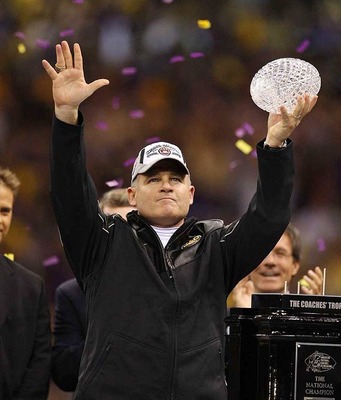


Again, what does it mean to be the head football coach at a high school, or anywhere for that matter.  I think the number one thing young candidates forget is the scrutiny in which you will be judged.  Remember, all the good things that happen are because of you and the bad things are because of you.  It does not matter that little Timmy can't bench press 100 pounds and is your starting tight end, or that you have three FBS running backs in your backfield, everything will revolve around YOU.  This comes as a shock to many new coaches, and some simply can't hack it.  Society has deemed the job this way, you either get used to it and evolve with it, or you will certainly get tossed by the wayside when you can't cope. 

I will give you an example.  I have a buddy, who took over a decent program a few years ago, they had won a state championship in school history and they had been to the playoffs a few years before falling on down times and firing their third year coach (whose best record at the time was 5-5).  In comes the new coach, right about the time that a crop of talented young freshmen were making their way on campus, having won two Pop Warner regional championships and one Pop Warner state championship, these guys were loaded.  A lot of these players started as freshmen and sophomores as my buddy had a little "house cleaning" to do when he got there.  Anyhow, long story short, they played for the state championship two years ago and lost by one point.  They did with 7 kids that were signed to FBS scholarships, 7 kids who went to FCS teams, 2 that played Division II ball, and 5 that went Division III or NAIA.  The next season, when the cupboard was bare, this team that was 11-3 the year before, went 5-5 and didn't even make the playoffs.  The following season they went 6-4, but also missed the playoffs, and my buddy is now no longer coaching there.  The reason, he didn't run a successful program.  Was he a good coach?  I think he his, hell I coached three years with him, and I thought he was a fine coach, but what do I know?  Did he win with just talent?  Maybe so, but talent is part of the picture when it comes to winning.  I have always defined success as when coaching meets talent.  A lack of either, and you can kiss success goodbye.


So remember, just because you think that being the head coach is the "dream job" you will be viewed under a microscope when it comes to EVERY decision you make.  These are things, as an assistant coach, you don't always see on Friday nights.  Every eye is on your decisions, and the outcomes, without having any inkling of what goes into preparing a bunch of young men to play the game in a week's time. 

You are also going to find that being the head football coach, in some places, has little to do with actual football.  In the grand scheme of things, football will be less than half what you have to do at some places.  I have been involved in programs where the head coach had to do all or some of the things listed below:
  • Fundraising- this might seem trivial, but I actually worked at a place where the football staff did no fundraising whatsoever.
  • Field Painting- yep, everywhere I've been the coaches have painted the field.  I have friends who look at me like I have an arm growing out of my ass when I say this, but that's just how it is.
  • Field Maintenance- Yep, you better believe it, be careful where you apply if you don't want to get those hands dirty!
  • Practice setup- I have seen this done different everywhere I've been.  The best place, was where I worked as a DC for the first time, the coaches did nothing when it came to field setup for practice.  We showed up, coached and left...why did I leave????
  • Strength and Conditioning- this too has been a 50-50 split where I've been.  Some programs have had S&C coaches on staff, while others did not.  Not a big deal, but it can be a further time suck.
  • Booster- I worked one place that the requirement was for the head football coach to be a member of the booster club as well as attend all meetings that were held so long as you were not in season.  My last gig as an assistant coach, the guy I worked for didnt' even know the names of the boosters!  Again, this differs everywhere, and I prefer a happy medium of the two situations I listed.


Some other things, that aren't necessarily school enforced are listed below:
  • Manager- that's right, you have to be the macro-manager of the entire ship.  You will be not only managing players, but assistant coaches as well.  Some guys don't see this, as they only see the X's and O's, but you are ultimately responsible for the daily managing of a football program, whose number could easily exceed 100 players, staff and personnel. 
  • Counselor- yep, you bet your sweet ass!  I have had to counsel many a young man when it comes to problems, most not having a single thing to do with the gridiron.  Some coaches don't think about this, and it becomes a drag on the job, but in all honesty I enjoyed helping young people, so it didn't bother me.
  • Coordinator- at both my head coaching stints, I was also a coordinator.  My first high school job I worked under a guy that was nothing more than a "figure head" coach.  Most schools don't have the money to spend on coaches, so having to coordinate is something you may have to do.  At the very least you might have to be a position coach, which isn't bad, but most coaches I know do have some sort of role as a coordinator on their team.  I even had a friend who was not only the head coach, but was also the offensive AND defensive coordinator where he worked.  Needless to say he was run ragged by the end of each season he coached there.
  • Parent- whether you like it or not, to a lot of the players you coach, you will be more of a father figure than they've ever had in their life.  Not many books on coaching spell this out, but it is an ever-growing part of the job that we must realize, and it does take time away from the actual "football" that you could be doing.  This part of the job can also put a lot of stress on you as a coach, so be warned!
  • Banker-most places I've been the coaching staff didn't manage there money, however in some places you will have full control over your account and your budget.  If you are not good at accounting, better find a staff member that is.  Also, if you are not good at budgeting, time to start getting better, especially since in most programs you need to get the most out of the dollar you possibly can!
  • Problem Solver-this is a big one, because everyone will be looking for you to put out the daily fires within the program.  You need to be quick with this one, as untreated problems within, or game time problems need quick thinking and action in order to solve them.  In one way or another, you will solve several problems throughout the course of a single football season, can you handle that?
I'm sure there's more that I'm missing, but these are basically the "highlights" of what can be asked of a head coach either directly or indirectly. 


Some Questions to ask About the Job You are Interviewing
  1. What happened to the previous head coach?  Was he fired?  If so what for?  Did he resign?  If so, why?  Sometimes these answers aren't obvious, but if you can get your hands on the previous head coach, you need to pick his brain.  See why he left, evaluate his reasons and determine if this is still the job for you.  Nothing says that you have to take the job, and it's still wise to interview, but you need to keep some of this stuff in mind during the application process.
  2. What is the current staff like?  Are they staying or leaving?  Will they be loyal if you are hired?  Are any of them also interviewing?  Some of this you'll have to find out for yourself after the hire.  You can get a good judge though if you can meet the current staff.  Most high schools don't get rid of entire staff's (though I was a part of a major purging here recently), so you should be able to contact them.  If one is interviewing for the job, just realize he's at an advantage over you in that he's known, however he can become a bigger problem for you if you get the job.
  3. What is the administration like?  Are the open and receptive to your ideas, or do they already have an idea of what they want to do with the football program?  How long has the current administration been at the school?  These are serious questions, because the administration is your boss, and you need to know who's running the ship.  Do they seem knowledgeable about football?  If they are is it to the point they would be meddling?  If they are not, are they open to learning about the game and it's impact on the school?  How is the A.D.?  Is the A.D. a "football guy", or is he involved mainly with some other sport?
  4. How is the booster club set up and what influence do they have on the hire?  I have been at only one place where the booster club was present at the interview.  This place was terrible, because the boosters basically ran the school, and the football program.  If things weren't done to their liking you got a visit from them, and no head coach has lasted very long at that school.  You need good boosters, but not meddling ones.  Most are meddlesome, however some to the point of being annoying, yet you can get involved with some that are power hungry like I've been involved with.  The power hungry booster club is a recipe for disaster, I highly recommend avoiding them at all costs.
  5. What is your budget?  Where does this money come from and how is it used?  I worked at a program that the baseball team kept the money for parking simply because they worked the gate.  THE BASEBALL TEAM!!!!  You got it, and yep, that football program wasn't very good either.  I also coached at a place where we kept the parking money and used it for charter buses to away games.  Nothing better than rolling up in a nice air-conditioned charter bus than the ol' yellow bird anyday.  You need to think about this one seriously because you need money to run a program, and to keep things nice and new to attract players. 
  6. How supportive is the community?  This is a big one.  Not only do you need an administration that is supportive, but you will need to have not only parents on board, but local businesses as well.  Most, if not all, good programs, have tremendous support for their local high school athletics, so check this out before interviewing. 
  7. What are the facilities like?  Are they in good shape and well kept, or in need of repair and revamping?  If they need to be revamped, is the A.D. and administration open to spending money to get the school's facilities on par with that of your competition?  What is the field like?  Is the football field in good shape?  Who maintains the football field?  You need to know this, because the answer to a lot these questions might be you!  You also need the freedom to keep up with your competition, especially in today's "instant gratification" society.  Kids want to go where it's cool and they can look good.  If you are entering a program that has a 30 year old weight room  and has been using the same jerseys for the past ten seasons, I would LOOK OUT!
  8. How has the program been doing both recently and in the past?  Has this program ever been to the playoffs?  Has this program ever won any sort of championship (district, region or state)?  In the words of a former mentor, "Don't go where you can't win".  This is very important, as I know we all want to leave our mark and our legacy turning around that downtrodden team, but believe me, all you are doing is shaving years off your life with the stress you'll ultimately inherit.  Take a long look at the school's history and how things have been in the past.  Why are they this way?  If you can't put your finger on a solution, I suggest avoiding that job altogether.


So I've Got the Job in Mind I Want, Now What Should I Do?
The number one thing I would tell any young coach, is to have a plan.  I would have a three, five and ten year plan developed based on the questions you've asked, as well as the research you've done.  Be very detailed in your plan, describe how you plan on achieving your goals for the program.  Described any changes you would make, and be very descriptive about these changes.  Make your plan liquid though and adaptable, you never know what you might be up against. Sure a part of your plan is to be a state champion, but who's isn't?  Also, how attainable of a goal is that really?  Looking at an example of mine, I worked for a guy at a private high school, that was doing well why I was with my friend, enrollment was at it's highest, as was sport participation.  Things were going good until the recent economic decline, then numbers began to dwindle, as did the facilities because the school was not generating the revenue to keep the facilities up.  Wins dropped off and the coach was to blame, and ultimately got fired in what is now a six man football program that hasn't won a game in the past two seasons (my friend has not been there for five years now, and I've not been there for over ten).  One of the parts of my friend's plan was that the team would be competitive and win championships, which he did in his first six seasons at the school, however once the talent level decreased and numbers dropped, so did the record.  His plan wasn't "fluid" enough to cover the bad times.  We know as a coach, we are all going to experience these bad times, you need to have this built in to your plan, and what the football program will look like, and be trying to do during these times. 


In reality, winning should NEVER be a part of your plan, and I know this sounds stupid, but when you have to "run what you brung" in high school football, you need to be careful with stating winning as your ultimate goal.  This is why I refer to the movie Facing the Giantsbecause in this movie, the team's goal is altered and they actually start winning.  Now I know, that's fairy-tale bullshit to most of you, but if all you coach for is wins, you are a very hollow person.  I coach, for the betterment of the young men I coach.  I want them to be better fathers, husbands, and members of society, so that this great country can prosper.  That is actually in my mission statement for every program I've ever interviewed for.  I don't coach to win, winning is secondary to our ultimate goal of making better men out of our players.  I think that is what every football coach's mission statement should say, but what the hell, I'm biased!


When you present your plan, be ready for questions.  Actually, you should prepare to be questioned.  You have to realize that Columbus was probably seriously questioned when he set sail for the New World...so will you.  Your plan may be new or foreign, many folks may even use the age old axiom "That can't be done here".  Don't let them sway you, stay true to your plan and your goals for the program when presenting the material.  Answer the interviewers honestly, and if you don't know, simply tell them, I do not know the answer at this time, but if that situation every arises, I will figure out a solution to the problem.

Whatever your plan is, it should be about the program and the players, and how the program will benefit the players and the school.  The administrators want to hear how you are going to bring school pride into the school, how you are going to help handle some of the more "troubled" kids by using football as a tool to reach these young men.  This is where you need to understand that being the head coach is so much more than just football.  I don't think many guys figure this out until it's too late, and unfortunately I was one of those guys.


My future
I don't know that I will ever head coach again, to be honest, it's not been fun for me.  I don't like the daily grind of things that aren't football, yet I completely enjoy the daily grind of football.  I really enjoy being a coordinator, however, after being an interim head coach last year, and the guy I'm working for retiring here soon, I'm sure the opportunity will arise for me to take over the head coaching role at the school I'm currently at.  This will be a big crossroad for me, as I've enjoyed being a coordinator for over five years now, but there is something in all of us that says "I want to be the boss".  We shall see, but the way I feel currently is that I will more than likely turn down the job, and at that point try to get back into high school football.  Anyhow, I hope this was a rewarding piece of information for those that are currently seeking employment as a high school head football coach.  Don't take that title lightly, as there's more to it than most realize!

Duece

Tuesday, November 27, 2012

The 8-2-1 Kickoff Return


For most of my coaching career, I have been a 5-4-2 kickoff return guy.  It's just what I was taught and how I did things when I got my chance to coach.  Now I've had teams in certain years that had kickoff returns for touchdowns here and there, but the most in a single season was only two.  There were several (and I mean SEVERAL) seasons where we had none!  Anyhow, I went and watched a local high school play in a playoff game last season, and I saw something I had never seen before.  They had eight guys on the line with only three guys being back deep!  Now I thought maybe their opponent was known for onsides kicks or something.  I watched the entire game as the opponent kicked the ball deep and gave up good returns for great field position.  The average starting field position that particular night was the 38 yard line.  Now these were on deep kicks too, the opposing team had a kicker that could put the ball consistently inside the five yard line, so as you can see the field position stat was pretty good (also considering one went for a touch back).  Lucky for me I don't go to too many football outings without my handy flip video, and so I recorded these kicks.  The following week this very same team was playing nearby so I traveled to see them again, and sure enough, they were still using the same kickoff return scheme.  After that, I just knew I had to find out more about it, and I did what any good, persistent, nagging football coach yearning for more information did, and I called a member of the coaching staff.   I ended up getting the specifics of the scheme and even got to look at (but unfortunately not keep) some more film of the scheme.  So back home I go and I delve into making this thing work on my middle school football team.  What sold me was when the coach told me they had been doing this for the past two seasons (now going on three), and their "block percentage" had increased almost three times!  I asked "block percentage", what the hell is that?!".  As it was explained to me, that is the number of your players making contact and maintaining contact during the kick return versus the total number of defenders being used on the kickoff team.  He said prior to running this scheme, their average block percentage was around 25 percent.  That means out of 11 players on the kickoff team, only three of them were being blocked.  His team's average starting field position was the 26 yard line, and they had not returned a kick for a touchdown since the 2006 season.  Upon installing the 8-2-1 scheme, here were the new numbers:
  • Block percentage went up from 25% to 73% in first season and 79% in second season.
  • Field position increased to the 32 yard line in the first season and the 39 yard line in the second season.
  • The first year they installed the scheme, they returned a total of four kickoffs for touchdowns and had 14 kick returns cross midfield that season.  The second year of the scheme, they returned 6 kicks for touchdowns and had 17 kick returns cross midfield.
I was hooked, but was still unsure if it would work at my level.  I brought it back to my head coach and he nixed the idea almost immediately.  The reasoning he gave is that teams would pooch and sky kick you to death, which is a fair assumption seeing as how much open space there is.  So we enter this season, with me being an interim head coach and after the third game of the season, I thought to myself, hell if this is my ship, I'm going to do things MY WAY!  I installed this in one practice and we stayed in it the rest of the season.  Here were our numbers for this past season:
  • Block percentage increased from 22% to 70%.
  • Field position increased from the 37  yard line to the 49 yard line (we don't get too many deep kicks).
  • One kickoff return for a touchdown increased to six kickoff returns for touchdowns (seven total on the year, a school record by three).  We had 1 kickoff return cross midfield in the first three games (the one returned for a touchdown) and that number increased to nine by the end of the season.
Now that I've shared with you the numbers, let's talk about the scheme and installation.


Personnel

Most of us have grown out of having linemen on special teams (I'm not a hater, hell I'm a former OL myself), but for those that do, now's the time to evolve.  This scheme is made for mostly defensive backs, linebackers, running backs, wide receivers and the occasional athletic defensive end.  The front eight need to be able to run and cover a guy man to man, but only for a short period of time.  The upbacks need to be fearless guys who are not afraid to catch a kick in traffic.  A good idea here is to think punt returner.  The upbacks do need to be able to block in space, but don't sacrifice blocking for being able to catch the football in traffic.  The returner, can be your typical kick returner, but he doesn't need to be a "missile", he needs to have the ability to read "cloudy" and "clear" and know how to run to daylight based on the blocks occurring in front of him.

Alignment
8-2-1 Alignment
Ok, the front line is a mirror of four players, there are two guards, two tackles, two ends and two wings.  They align about two to three yards off the 50 yard line and are facing forward looking at the kicker and the football.  There are two upbacks, whose depth depends on the kicker's ability and whether or not the opposing team likes to sky kick or not.  As a base rule at the junior high level, I aligned my guys and the 35 yard line (this is assuming we knew nothing about our opponent's kicker).  The middle returner aligned at average kick depth based on film or pre-game scouting.  If we didn't know anything about the opponent's kicker then we aligned him at the 25 yard line.  Remember, you will have to adjust these some for high school ball, so bear with me.

Width alignments had the guards between the hash mark and the middle of the field with both tackles aligning on the hash marks.  The ends would align halfway between the hash and the bottom of the numbers.  The wings would align just off the bottom of the numbers.  The Upbacks basically stacked behind the ends, splitting the difference between the hash and the bottom of the numbers as well.  The returner would align in the middle of the field, splitting the hashes.


Assignment

Blocking assignments were VERY simple.  The blockers would begin their count from the closest sideline(this is assuming a middle return, which is all we ran last season, however the sky is the limit when it comes to the types of returns you can run), and would count until they got to their number.  The way it worked was this, since the the right tackle for instance (RT in the diagram) was the fourth player from the right side, he counted out four men and that was his man.  So for the Right wing, he would have one, the right end would have two, the right tackle would take three and the right guard had four.  We did not count the kicker in this scheme, the returner has to make the kicker miss.  Now I know what  you are saying, that leaves, two players unaccounted for, well how this works is that the upbacks are always responsible for the fifth guy from their respective sideline.  Here is how it looks on paper.


Middle Return
Technique

The technique the front wall blockers use is very similar to the shuffle technique used by defensive backs or basketball players.  The player will open in the direction of his man (or zone if using a zone scheme) and will shuffle out, staying low and keeping a good wide base and low center of gravity.  As the defender "eats up" the blocker's cushion, and declares which side he is going, the blocker will then turn and run with the defender.  If the defender decides to try to switch lanes, the blocker will simply flip his hips, much like a defensive back doing a zone turn would and then "wall off" the defender from the other side.


Blocking is not a great word for the exactly what the blockers do.  These players are quite simply put, "in the way".  I coached my guys this past season, to get on a hip and stay on a hip, but most importantly "be in the way" during a return.  In some of the video clips you will see, we don't do a very good job of blocking, but we are in the way enough the defender loses lane integrity and a seam is opened up for the returner.

Speaking of the returner, when teaching this guy how to return, patience is key.  He needs to have a good burst of speed, but does not need to be a "bottle rocket".  I link the type of running he does to that of a good zone tailback, in that he gets the ball and lets the blocks set up and lets the defenders declare where they are going to be.  Once this occurs the returner simply "runs to daylight", finding a seam and exploding through it.


Other types of Returns

Two other returns are left and right, and are blocked in this manner.  The side away from the call will block as they would in a middle return (shown above), and the call side, will begin their count in negating the first two men from the sideline. 


As you can see here's how the new count works for a return called to the right.  The right wing (RW) is going to block number three, the end has number four and so forth, while the upbacks pick up the one and two on the called side.

There are also zone returns, where each player blocks a gap in one direction much like a slide protection would work with the upbacks blocking the first defenders to show.  The possibilities are endless here as you can have the front eight block the gap to their right, left, inside or outside, depending on how you want to handle the return.  The zone returns are a great way to handle teams that like to cross their players to confuse the man scheme and it is recommended to have both schemes in place.

Dealing With the Bunch Attack

What do you do when dealing with the bunch attack?  This is pretty simple, and is handled by the front eight as well as the two upbacks.  The upbacks and wings drop back 10 yards off the ball, the wings are centered between the hash mark and the top of the numbers,while the upbacks are inside the hash marks.  The front eight, will align over the ball, but now the guards and tackles will be inside the hash marks, with the ends aligning on the hashes. 


If the kickoff team then spreads out, the kickoff return team will simply align as they normally would against a regular kickoff.  It should be noted that when facing teams that do this type of kickoff scheme, it is better suited for a zone blocking scheme rather than man.


Concerns about the 8-2-1

Some concerns many coaches have about the 8-2-1 is all the open field that it presents when you look at it on paper.  Many coaches elect to sky or pooch kick to try and put the 8-2-1 in a bind, however this is easily negated.  First, the upbacks handle all sky kicks, and they do so by giving a "sky" call to the front line.  Once a sky call is heard by the front line, they quit dropping and put their foot in the ground and begin to block.  Now the returner does not have a defender bearing down on him while trying to receive the football.  When in doubt the upback should always fair catch any sky kick.  I made this mandatory last season, and it worked quite well for us.  Later in the season, I gave my guys a bit more freedom to do what they wanted with the ball and it worked quite nicely.  One thing to note is that when an upback gets the football, the returner should replace him in the blocking scheme. 


Advantages of the 8-2-1

Players seem to "fit" better into this scheme more than any other I've run.  I always seem to have a bunch of leftover defensive back/wide receiver type players who one way or the other don't get much playing time.  Here is a way to get those guys on the field.  Remember the blocks are the greatest and all they have to do is "be in the way".  Most of those kids can and will do that job quite effectively.

It makes the "wedge buster" obsolete.  No longer can guys run down field and simply "tee off" on your wedge players.  This in turn could help lead to a reduction in concussions (Thanks Coach Hoover), which as we all know in college and the NFL this has been a serious issue that has changed the standard kickoff over the past few seasons.  When I asked my guys at the end of this past season what they liked about the 8-2-1, the majority said that they no longer felt like a "target", which made enough sense to me to stick with the scheme.

Onside kicks are immediately negated.  First you are basically playing with your hands team out there.  Since most guys are skill position, handling the football is the least of their worries.  The eight men on the line also immediately reduces the kicking team's chances of a successful recovery.

The kick returner can treat the return similar to a zone tailback.  No longer do you need to look for that kamikaze returner who is fearless and will run full bore into traffic.  Now all you need is a runner who has good vision and can cut off blockers.


Sorry it has been so long between posts, I'm still trying to get my ducks in a row, and really hitting the book hard after such a grueling season.  I do have a request to make, if anybody can give me a hand with wanting to share any of their 46 defense resources, please hit me up at footballislifeblog@yahoo.com.  I'm in need of some major improvements coming into next season, and I'm always willing to look at new ideas.  Hit me up and we can talk.  Hope all that are in the playoffs are still working hard and motivating those young men to do their best.  This can be one of the most trying times of the season, but remember...IT'S WORTH IT!!!


Duece


Tuesday, November 6, 2012

2012 In Review


Whew! Well, it's over. Having lost the league championship, yet finishing 7-1 on the season, many would say that was a great year. I think, however, that this past season has been one of the most unbelievable rides I've ever been on. I want to take time out to share this with you, and maybe you can see some of my shortcomings and some things we did to take advantage of some of our situations etc. Hell, analyze my situations and see what you'd have done differently, I'm all for that. Whatever you can take from this season, I'd be glad to, and whatever you can add, please, by all means shoot me an email at footballislifeblog@yahoo.com.

Lessons Learned
The first thing I learned is that the Unbalanced Single Wing (UBSW) is a pretty cool offense.  My hat's off to Dave Cisar's system as we were able to install it from the ground up and had great success with it.  We ended up having the Power series, the Spin series and Jet series in at the start of the season and never really added anything after that.  Our Jet series really came alive in the latter part of the season once folks had film on us and knew what we were going to be doing.  The other thing is the UBSW is one of the most fun offenses I've ever coached in (yes including Flexbone).  The simplicity of it is so simple, yet because so many folks have not seen the offense in decades, it creates quite a bit of confusion for the defense.  Anyhow, it was very fun to coach in, and I got numerous questions from parents, coaches and even the officials!

I have had tragedy strike during football season, but none like this season.  I've never lost a player, and I've never had this much tragedy strike.  Losing two parents, and a player in the span of four days was the most incredibly terrible thing I've had to witness as a human being.  Then having to put it all together and put it out there on the field was pretty tough too.  I was amazed at the resiliency of the young men I coached.  I actually think THEY helped ME deal with it all.  Then in the end, we lost a player to a very serious back injury, that may have ended his football career.  Thankfully enough, the young man will walk, however football is probably out for the rest of his life.  In all this tragedy I felt like the young men were able to keep it together, keep things in perspective and lose themselves in the game, exactly like I would have them do.  I can't say enough about the quality of the young men I coached this year, as our character shined through time and time again this season.

I have to learn to enjoy the season more.  I have just went through a 7-1 season, in which we set the record for best season in school history, and I feel as though we failed.  The season ended two weeks ago, and yet I cannot come to the realization that we did good, despite not winning our league title.  I'm not sure how you ever get over what we had happen at the end of the season where we come up short on a goal we set out to accomplish, but if you have any suggestions, send them my way, as I'm still hurting.


The 46 defense is a great defense, but it does have its limitations.  I found out exactly what those were this season.  The seven technique in that defense nearly got us killed this year and I didn't have that kid to fill that position.  A year ago, we in our league we faced no 21 personnel teams whatsoever.  The breakdown was as follows:
  • 5- 10 personnel teams
  • 2- 20 personnel teams
So as you can see the need for a dominant seven technique was not needed.  In comes the 2012 season, and boy look at how things change:
  • 3-21 personnel teams
  • 1- 11 personnel team
  • 3- 10 personnel teams
Much different mix than a year before.  Anyhow, the addition of the tight end to the scheme really hurt us as I just did not have that player to sacrifice at the seven technique position.  Now, normally I'm a four man front guy, but I work for somebody and he likes the odd front, so I ran the 46 with 3-3 personnel.  Well, I moved to a true 3-3 for two games to try and stunt/blitz my way into some things, and I did not care for this at all.  The kids liked it, but we were sloppy with our execution of the blitzes and when you are sloppy in the 3-3, the holes show up BIG TIME.  So then I moved back to my old staple, the 4-2-5.  I played cover 3 with it and mixed in some man to man, and things started to tighten up.  Now I have the blessings of my boss, I get to run whatever I want next season.  Looks like I'm going back to the ol' 4-2-5!

Be ready for anything.  Here I was cruising along as a coordinator, and BAM, all of a sudden I got the head coach title slapped on me.   Three weeks before the season comes up, my boss, the head coach, has a mild heart attack. Now, I'm freaking out because this is a guy who has been a mentor of mine for years and is the epitome of a class act. Now I'm sitting there in a hospital room with him telling me, "You're it, go coach em' up kid". To which I dang near soil myself! Now, I've been a head coach in career twice, and I have to say this, I didn't care for it to be honest. The politics, the whining parents, the nagging administration, it just wasn't for me. I like my job as the defensive coordinator as I'm free to do what I want, when I want, and how I want. Sure, you do have some of that freedom as the head guy, but there's just too much political BS involved for my taste.  Anyhow, things went smooth and I didn't have much in the way of headaches from the parents, but then again winning cures everything.  Just be ready for anything, you never know what you will face, or what you will come up against.  In retrospect, looking back on the past season being able to do what we did with the tragedy we had AND an interim coach, I'm really quite amazed. 

Be ready for anything grasshopper...


Don't do too much.  I really put too much on my defense at times.  Our offense and special teams won us a lot of games, which is the EXACT opposite of how my other successful teams have won (in the past I've been more like UF is now).  Anyhow, winning is winning, so I'll take it, but not playing solid defense came down to me.  I have to do better in that department and keep less on the defense and just "let them play".

Special teams are special.  Our special teams unit single handily was the most outstanding unit on the field this season, with our punt team and kickoff return team leading all groups.  We returned a school record (and league most) 8 kickoffs for touchdowns this season.  Punting-wise we averaged 43.4 yards per punt in JUNIOR HIGH (yes, my punter was a stud) and we converted EVERY fake we attempted this season (four for four).  We only had to punt a grand total of 10 times this season, which is a third less than last season (34 times).  We did give up one blocked punt this season and had one bad snap, which was our total from a year ago, so we did not get better there.  We did not allow a single kickoff return for a touchdown as we followed the "onside every time" philosophy this year (that's after giving up 4 KOR's for touchdowns the year before).  Now, we did not have a very accurate field goal kicker, so we did not even have a field goal team, but we averaged a dismal 43% on our two-point conversions this season, which must get better.  All in all, I was impressed with our special teams, and our ability to flip the field position on our opponent was second-to-none in our league.


Get everyone involved.  Another lesson I took from Dave Cisar, was to get as many players involved as you can.  Our retention rate was unreal this season.  We had 44 kids show up day one, and by the start of the first game we had all 38 uniforms filled, and did not have to have cuts (we had three kids quit, one get hurt, and two others did not have the grades).  By the end of the season we finished our final game dressing 34 players due to injuries.  NOBODY quit after the initial 38 were selected.  This is after a season in which we finished with 22 kids after starting with 28 (four quit, 1 was kicked off, and 1 was injured).  Our ability to get everyone involved both in practice and in games was essential to this retention rate.  Another thing I implemented was the "Buddy System".  Each eighth grader was responsible for a seventh grade teammate.  They exchanged phone numbers and had to answer weekly questions about their partners in front of the team.  I think the Buddy System really helped our overall team chemistry and kept us from having individual "cliques" within our group of 38. 


Tackle everyday.  The head coach and I disagreed on this originally, but since implementing this in his absence he has seen the light.  We were AWESOME tacklers this season compared to last.  Last year it took three to four guys to slow a ball carrier up, whereas this season we had several guys make solo tackles.  On film, the biggest difference is that the first guy would get the ball carrier down instead of holding on why the others got there.  We literally tackled everyday for the first month of the season.  After that we tackled on Monday and Wednesday with Monday being full bore tackling stations, and Wednesday being fit and freeze only.  The last two weeks of the season we tapered off to just fit and freeze type drills on Monday only. 


Alignment and Assignment and Fit-and-Freeze drills are essential at this age.  I have always been a big team guy.  I want to see reps and I want to see them live.  Well, in researching practice methodology over the past few years, I have found the good ones don't do this.  They do a lot of FNF and AA drills instead.  I cut our live team time on offense in half this season and we rarely went live on defense.  Offensively we did FNF on Monday, with live team on Tuesday and all plays on air on Wednesday, which included simulating game situations.  Defensively, we did FNF on Monday, Inside Drill on Tuesday and Seven-on-Seven on Wednesday.  Now if a team we were facing had very little passing threat we would do a live defensive team on Tuesday and then do Inside Drill on Wednesday.  Special teams we did at least one live per week.  Early on in preseason we did all of them live, but as the season progressed we cut that down to 2 a week, then at the end we did not do any live special teams.  FNF really improved, not only our technique, but our younger players confidence as well.  There's a lot you take for granted when it comes to coaching and one thing was my players level of development, and boy did I undershoot it.  That was clearly evident from my coaching last season.  This season was much better as we took the approach that our players knew absolutely nothing about the game and we were starting at the ground floor. 

The No-Huddle offense is the way to go.  I have dabbled with no-huddle in the past, but not like I did this season.  Now we were no Oregon, but in our live team sessions we averaged about 25 plays a session, which is better than a play a minute.  We had two speeds, regular and 9-1-1.  9-1-1 was our hurry up stuff and we really did well with that.  In three out of our eight games we scored right before halftime using our up-tempo pace and the largest amount of time we had was 1:18.  In game three we scored on a four play 61 yard drive with 55 seconds left in the half and one timeout.  In game five we scored on a five play 77 yard drive with 1:09 left and two timeouts.  In game seven we scored on a five play 48 yard drive with 1:18 left to go and one timeout remaining.  These were points we'd not have gotten last season, and in games four and seven they were the difference in the game.  If you are still huddling, you are wasting a lot of time, and I don't mean in the games.  The benefit we saw from going no-huddle is not in the games, but in practice.  We doubled our reps on practice, by far and in the games you automatically have a two-minute offense built in.  We can't go hurry up because a lot of our players play both ways, but still, we went no-huddle to improve efficiency in practice time and eliminate wasted time. 


Things to Improve On

Practice efficiency.  There was still a lot of wasted time in practice.  Now, mind you, we were practicing for easily two-and-a-half hours a year ago, and cut that down to two hours on average this season.  Still, there are areas where we need to improve and be able to get these kids home at a decent hour.  I have pushed and pushed, but the coaches I have are not really taking to the up-tempo like I am.  I don't have the luxury of firing anyone either as I was glad to have the other two helping me.  Anyhow, I will continue to work with them and push for MAXIMUM efficiency until we get it.

Relaxing.  I have a tough time turning off football, and even though this is Junior High football, I still constantly watched film, breaking things down and even took things so far as creating scouting reports (our league allows us to scout and trade film).  I also have a tough time detaching from the game, even in the off-season.  I simply cannot get my mind off the game, and I have to, or else I'm afraid burn-out is coming.  Any suggestions would be greatly appreciated.


Finding a kicker.  Holy cow, thank goodness we onside every time, or else I'm not sure what we'd have done.  Also, we could have used a couple of field goals, that thankfully didn't come back to haunt us during the season.   I need to learn more about the individual technique of kicking, as to be honest I'm clueless.


Getting over the wall.  Our player development went good for the first six games.  Then we seemed to hit a wall where nobody really improved except for the younger players.  This concerns me, because it's the second year in a row I felt this way.  I even felt as though some of our players went backwards in their development, which is a really bad scenario.  Several players plateaued about that time in the season, and our toughest games were towards the end of the season.  I need to find ways to keep the young men motivated for an entire season, and keep developing their skills.  I know there comes a point in the season where getting any better is slim to none, but you CAN improve at least a little bit every day...right?


Handling a loss.  My favorite quote is one I live by..."I hate to lose even more than I love to win".  This is me in a nutshell.  A win to me is a win, nothing big about it, you did your job, you won.  A loss is failure though, and unacceptable.  I have a hard time coming to grips with losing, and when you lose the league championship on the last game of the season when you've gone 7-0, it really becomes are a hard pill to swallow. 

Dealing with officials.  I guess I'm getting a bit crotchety in my old age, as I had a few of those yeller' hankies thrown on me this season.  However, I must say, our referees made the NFL replacement refs look like officiating scholars.  Anyhow, this does not bode well when teaching young men about dealing with adversity.  I'm sure that official did not need me to bite his head off, I should merely "explain" my point of view, rather than trying to stuff it down his throat.  Point taken!

Do you kiss your mom with that mouth?


Well, that's my 2012 in review.  I feel with what my little guys went through this season, and where they came from, it has been a success story.  I'd love to have a trophy to put in the case (believe me, we need one, that damn thing is bare), but the memories of this season will go down as a special one in my book.  I have to say, watching young men conquer adversity like this bunch did, was quite a site to see.  I only hope next year we can do the same...


Duece

P.S.- For those headed to the playoffs, now's not the time to let up, keep on keepin' on!!!  Good luck!


Sunday, January 8, 2012

Defensive Line Play in the 46 Nickel


Well, after using the 46 Nickel for a couple of seasons now, I'm getting my stuff together and preparing some manuals. The first one is the defensive line (DL) manual. Defensive line play is critical in any defense, so the 46 is no different. One unique thing about the 46 is the defensive line play. For most that haven't watched Rex Ryan's video entitled "Coaching Football's 46 Defense", you are missing out on defensive line play. Before I dive into the "how", I'm going to go to the why, which will result in us strolling down memory lane a bit.


As some of you know, I went to the 46 out of pure desparation two years ago. The top reason I used the 46, was the defensive line play I learned from Rex Ryan. Ryan's method of teaching and reacting to blocking schemes fits lesser athletic and lesser talented DL. Two years ago if you would have looked up "lesser athletic and lesser talented DL" in the dictionary, a picture of my front four would have been in there! Needless to say, we needed something to help us out, and in this case scheme was our answer. So now that you see the "why", let's look at the "how".

Speaking of history and memory lane, for those that know me, they know I'm a big Miami 4-3 guy. It's the defense I cut my teeth with. The technique I was brought up on, was pure block down, step down (BDSD), and to this day BDSD is still a large part of my teaching when it comes to defensive line. The problem with some of the basic fundamentals of defensive line play in the Miami 4-3 is that it does take some athleticism to do some of the things being asked of these players. For most of my career I've had those guys, however at my last stop, and where I'm currently at, we are devoid of anything remotely close to what I'd call an athlete on our defensive lines. Basically, we are "space eaters" that are good at getting in the way of things, rather than getting off a block and making a play. So, enter in Rex Ryan's teaching on how to play DL!


I have always taught, there are four blocks that a DL has to react to and they are:

  1. Base block
  2. Reach block
  3. Down block
  4. Pass block 
Ryan does not do this, he teaches two very simple rules.  Don't get reached, and don't allow the jump-through (known by most as the scoop block).  So in essence he's taken the system I (and many others) learned and cut it in half.  Yes, I know pass blocking is the same for both, but that's a whole different topic.  Ryan lumps the base block and the reach block together, cutting the teaching down for both.  The down block is also treated like the scoop block, so no new teaching there either.  Ryan refers to this as "generic coaching".  What this means for those that are DL coaches, is you teach only a couple of sound reactions to blocks, and it has to do with basically the direction of the OL the DL aligns over.  You really cannot ask for a more simplified system. 

In 2009 this is just what we needed, as we were not good enough to react to four different blocks, yet we could master the two that Ryan taught.  The reads weren't the problem though, as much as the movements themselves.  Ryan teaches simpler, more effective movements and reactions to blocks, than some of the older, more traditional schemes do. 

Ryan goes further in his discussion on dividing blocks into two categories, rule blocks and reacitonary blocks.  The reach, scoop, and double team fall into the rule block category, while the fold, trap and pass blocks fall into reactionary blocks.  The reactions to all these blocks is still only 2 movements, which is the basis for the simplicity behind the way Ryan teaches his defensive linemen.  This worked perfectly for us, because we felt our DL could handle having their movements, basically cut in half.


Probably the most eye-opening of Ryan's teaching methods is his famous "hips to the hole" reaction.  Many schemes, such as the one we were teaching, focus on the DL's head and hand placement.  Ryan teaches the hips to the hole method of defeating the reach block and double team.  What this means, it that instead of the traditional teaching of "run with your gap" (the DL's gap moves with a reach block, so he must run to maintain it), Ryan teaches to swing the hips in the direction of the reach, thereby gaining leverage on the blocker and filling the gap with the DL body.  The traditional method, has the DL use a push-pull technique attempting to run with the blocker and keeping the DL's head in the gap, with the hips trailing behind.  When you look at it, the OL has all the leverage because the DL only has his head an one arm to stop the OL, whereas with Ryan's method, the DL is using all of his body and both arms to styme the OL and keep the gap from widening.  Again, the game and technique boil down to simple physics!  Sure, a good DL should be able to run with his gap, maintaining leverage, but after teaching both, with sub-par athletes at the DL position, I can tell you, Ryan's method is much better for those suffering from the LOFT syndrome (Lack of Freakin' Talent). 


The double team only gets tweaked ever so slightly, and that is by having the DL overexaggerate the swinging of the hips into the OL that is attempting to overtake him.  This stalemates double teams, because of physics once again.  The DL makes himself wider, thereby creating a larger "clot" in the gap, which is tougher to move than if he were to drop and try to make a pile.  Plus, if he drops to make a pile, you are trading one for two, not what you want on defense.  This method of defeating the double team also kills the combo block.  Looking at your typical three technique, if they are trying to combo and get an OL on the LB, the DL prevents this by grabbing one of the OL and swinging the hips into the other.  The hips, force the trailing OL to have to go around the DL, thereby losing blocking leverage on the scraping LB.  This is where the technique paid off for us.  We were getting our LB's killed on combo blocks because our guys were trying to be penetrators (which we taught), and once we switched our undersized LB's were able to fly to the football. 


To defeat the scoop blocking scheme is not all that much different than the reach block, as again, the DL is using simple physics against the blocker.  The DL shoots the hands into the OL as he feels the scoop block working away from him, he simply latches on to the OL and utilizes a push-pull technique which does one of two things.  First it slows the blocker's momentum down, which is a key element to scoop blocking (just watch Georgia Tech's OL).  This keeps the blocker from being able to gain leverage on a scraping LB.  The other thing it does, is prevent the DL from being cut, and frees up the DL to chase the play. 

These techniques are very easy to teach, but at the heart and soul of both techniques is the hand play of the DL.  I think hand play for DL is an extremely underrated technique.  Looking back, you will see the hand placement of the DL is critical.  When defeating the reach, it is imperative that the DL punch his hands into the near shoulder and sternum of the OL so as to styme the OL's movment so the DL can swing the hips and gain leverage.  If there is no punch, the momentum of the blocker is not stopped and the hips cannot be swung into the gap.  The jump through utilizes the hand placement even more so.  The DL must again, shoot the hands, so as to slow the momentup of the scoop blocker, and then be able to pull himself by and behind the blocker. 


I know that sounds quite complicated, but it's not.  To be honest neither style of DL technique will work with poor hand placement.  This is why I say, hand placement and proper punch technique are often overlooked and undertaught. 

The reactionary blocks are even simpler than the rule blocks.  Ryan states there is basically no wrong way to play these.  I had a hard time wrapping my head around this concept because my entire coaching career I'd been schooled in one thought of DL play.  But when you watch the techniques on the video and he describes the various methods of defeating these reactionary blocks, it really opens your eyes.  What it means to the DL coach is, let your guys play.  I think all coaches at some point in their careers are guilty of "overcoaching".  Ryan, I'm sure, has fell prey to this too, and has seen the light, as against the reactionary blocks he just lets his guys play.  This really makes teaching the DL simple, but at the same time, is highly effective.  A good example of this is the outside fold block on a three technique.  There are two very simple ways to attack this scheme.  The DL, if quick enough, can get off the ball and get in the hip pocket of the puller, thereby putting himself right in the gap being attacked.  Nothing wrong with that!  Now, say your DL is a bit of a bulkier guy (like ours were), there's nothing wrong with the DL "chipping" or clubbing across the face of the down block either.  This puts the DL right back into the gap where the offense is attacking.  As you can see, the two methods are equally effective, and since Ryan let's his guys play it, the players are playing to their abilities and not being forced into a scheme that they cannot execute.

Some of the other basic philosophies of the 46 DL are very similar to other defenses I've read about.  Ryan does not elaborate much on stances, other than the DL should be comfortable and able to move laterally.  Ryan does talk about using short choppy explosive steps rather than big steps in order for the DL to keep his balance.  One topic Ryan states is the abiltiy of the defender to neurtralize the blocker.  He does not ask his DL to create a new LOS, but rather maintain the LOS, which can be seen in the clips.  This maintenance of the LOS, means the LB's are free runners and able to attack open windows in the offense. 


When we made the jump to the 46 Nickel, the DL play was the top reason we made the switch.  The results were immediate, in one week we made a huge turnaround in our DL play, and the film grades showed.  Obviously there are some other nuainces to DL play in the 46, but the heart and soul is the technique shown here.  I never knew much about these until I bought Rex Ryan's book on the 46, as well as the DVD.  Both of these are must buys for anybody learning about playing the 46 defense.


Well, the offseason has begun.  Coaches are tweaking offenses, and defenses and players are hitting the weight rooms.  This is not a time to be standing still!  Recruiting is also in full swing, do your seniors a favor and work your tail off for them, just like they did for you.  You never know just how much that means to your players.  Hope everyone is off to a great New Year. 


Duece

P.S.- I need some good punt block info.  If anyone is willing to share, please, hit me up!!!


Defensive Line Play in the 46 Nickel


Well, after using the 46 Nickel for a couple of seasons now, I'm getting my stuff together and preparing some manuals. The first one is the defensive line (DL) manual. Defensive line play is critical in any defense, so the 46 is no different. One unique thing about the 46 is the defensive line play. For most that haven't watched Rex Ryan's video entitled "Coaching Football's 46 Defense", you are missing out on defensive line play. Before I dive into the "how", I'm going to go to the why, which will result in us strolling down memory lane a bit.


As some of you know, I went to the 46 out of pure desparation two years ago. The top reason I used the 46, was the defensive line play I learned from Rex Ryan. Ryan's method of teaching and reacting to blocking schemes fits lesser athletic and lesser talented DL. Two years ago if you would have looked up "lesser athletic and lesser talented DL" in the dictionary, a picture of my front four would have been in there! Needless to say, we needed something to help us out, and in this case scheme was our answer. So now that you see the "why", let's look at the "how".

Speaking of history and memory lane, for those that know me, they know I'm a big Miami 4-3 guy. It's the defense I cut my teeth with. The technique I was brought up on, was pure block down, step down (BDSD), and to this day BDSD is still a large part of my teaching when it comes to defensive line. The problem with some of the basic fundamentals of defensive line play in the Miami 4-3 is that it does take some athleticism to do some of the things being asked of these players. For most of my career I've had those guys, however at my last stop, and where I'm currently at, we are devoid of anything remotely close to what I'd call an athlete on our defensive lines. Basically, we are "space eaters" that are good at getting in the way of things, rather than getting off a block and making a play. So, enter in Rex Ryan's teaching on how to play DL!


I have always taught, there are four blocks that a DL has to react to and they are:

  1. Base block
  2. Reach block
  3. Down block
  4. Pass block 
Ryan does not do this, he teaches two very simple rules.  Don't get reached, and don't allow the jump-through (known by most as the scoop block).  So in essence he's taken the system I (and many others) learned and cut it in half.  Yes, I know pass blocking is the same for both, but that's a whole different topic.  Ryan lumps the base block and the reach block together, cutting the teaching down for both.  The down block is also treated like the scoop block, so no new teaching there either.  Ryan refers to this as "generic coaching".  What this means for those that are DL coaches, is you teach only a couple of sound reactions to blocks, and it has to do with basically the direction of the OL the DL aligns over.  You really cannot ask for a more simplified system. 

In 2009 this is just what we needed, as we were not good enough to react to four different blocks, yet we could master the two that Ryan taught.  The reads weren't the problem though, as much as the movements themselves.  Ryan teaches simpler, more effective movements and reactions to blocks, than some of the older, more traditional schemes do. 

Ryan goes further in his discussion on dividing blocks into two categories, rule blocks and reacitonary blocks.  The reach, scoop, and double team fall into the rule block category, while the fold, trap and pass blocks fall into reactionary blocks.  The reactions to all these blocks is still only 2 movements, which is the basis for the simplicity behind the way Ryan teaches his defensive linemen.  This worked perfectly for us, because we felt our DL could handle having their movements, basically cut in half.


Probably the most eye-opening of Ryan's teaching methods is his famous "hips to the hole" reaction.  Many schemes, such as the one we were teaching, focus on the DL's head and hand placement.  Ryan teaches the hips to the hole method of defeating the reach block and double team.  What this means, it that instead of the traditional teaching of "run with your gap" (the DL's gap moves with a reach block, so he must run to maintain it), Ryan teaches to swing the hips in the direction of the reach, thereby gaining leverage on the blocker and filling the gap with the DL body.  The traditional method, has the DL use a push-pull technique attempting to run with the blocker and keeping the DL's head in the gap, with the hips trailing behind.  When you look at it, the OL has all the leverage because the DL only has his head an one arm to stop the OL, whereas with Ryan's method, the DL is using all of his body and both arms to styme the OL and keep the gap from widening.  Again, the game and technique boil down to simple physics!  Sure, a good DL should be able to run with his gap, maintaining leverage, but after teaching both, with sub-par athletes at the DL position, I can tell you, Ryan's method is much better for those suffering from the LOFT syndrome (Lack of Freakin' Talent). 


The double team only gets tweaked ever so slightly, and that is by having the DL overexaggerate the swinging of the hips into the OL that is attempting to overtake him.  This stalemates double teams, because of physics once again.  The DL makes himself wider, thereby creating a larger "clot" in the gap, which is tougher to move than if he were to drop and try to make a pile.  Plus, if he drops to make a pile, you are trading one for two, not what you want on defense.  This method of defeating the double team also kills the combo block.  Looking at your typical three technique, if they are trying to combo and get an OL on the LB, the DL prevents this by grabbing one of the OL and swinging the hips into the other.  The hips, force the trailing OL to have to go around the DL, thereby losing blocking leverage on the scraping LB.  This is where the technique paid off for us.  We were getting our LB's killed on combo blocks because our guys were trying to be penetrators (which we taught), and once we switched our undersized LB's were able to fly to the football. 


To defeat the scoop blocking scheme is not all that much different than the reach block, as again, the DL is using simple physics against the blocker.  The DL shoots the hands into the OL as he feels the scoop block working away from him, he simply latches on to the OL and utilizes a push-pull technique which does one of two things.  First it slows the blocker's momentum down, which is a key element to scoop blocking (just watch Georgia Tech's OL).  This keeps the blocker from being able to gain leverage on a scraping LB.  The other thing it does, is prevent the DL from being cut, and frees up the DL to chase the play. 

These techniques are very easy to teach, but at the heart and soul of both techniques is the hand play of the DL.  I think hand play for DL is an extremely underrated technique.  Looking back, you will see the hand placement of the DL is critical.  When defeating the reach, it is imperative that the DL punch his hands into the near shoulder and sternum of the OL so as to styme the OL's movment so the DL can swing the hips and gain leverage.  If there is no punch, the momentum of the blocker is not stopped and the hips cannot be swung into the gap.  The jump through utilizes the hand placement even more so.  The DL must again, shoot the hands, so as to slow the momentup of the scoop blocker, and then be able to pull himself by and behind the blocker. 


I know that sounds quite complicated, but it's not.  To be honest neither style of DL technique will work with poor hand placement.  This is why I say, hand placement and proper punch technique are often overlooked and undertaught. 

The reactionary blocks are even simpler than the rule blocks.  Ryan states there is basically no wrong way to play these.  I had a hard time wrapping my head around this concept because my entire coaching career I'd been schooled in one thought of DL play.  But when you watch the techniques on the video and he describes the various methods of defeating these reactionary blocks, it really opens your eyes.  What it means to the DL coach is, let your guys play.  I think all coaches at some point in their careers are guilty of "overcoaching".  Ryan, I'm sure, has fell prey to this too, and has seen the light, as against the reactionary blocks he just lets his guys play.  This really makes teaching the DL simple, but at the same time, is highly effective.  A good example of this is the outside fold block on a three technique.  There are two very simple ways to attack this scheme.  The DL, if quick enough, can get off the ball and get in the hip pocket of the puller, thereby putting himself right in the gap being attacked.  Nothing wrong with that!  Now, say your DL is a bit of a bulkier guy (like ours were), there's nothing wrong with the DL "chipping" or clubbing across the face of the down block either.  This puts the DL right back into the gap where the offense is attacking.  As you can see, the two methods are equally effective, and since Ryan let's his guys play it, the players are playing to their abilities and not being forced into a scheme that they cannot execute.

Some of the other basic philosophies of the 46 DL are very similar to other defenses I've read about.  Ryan does not elaborate much on stances, other than the DL should be comfortable and able to move laterally.  Ryan does talk about using short choppy explosive steps rather than big steps in order for the DL to keep his balance.  One topic Ryan states is the abiltiy of the defender to neurtralize the blocker.  He does not ask his DL to create a new LOS, but rather maintain the LOS, which can be seen in the clips.  This maintenance of the LOS, means the LB's are free runners and able to attack open windows in the offense. 


When we made the jump to the 46 Nickel, the DL play was the top reason we made the switch.  The results were immediate, in one week we made a huge turnaround in our DL play, and the film grades showed.  Obviously there are some other nuainces to DL play in the 46, but the heart and soul is the technique shown here.  I never knew much about these until I bought Rex Ryan's book on the 46, as well as the DVD.  Both of these are must buys for anybody learning about playing the 46 defense.


Well, the offseason has begun.  Coaches are tweaking offenses, and defenses and players are hitting the weight rooms.  This is not a time to be standing still!  Recruiting is also in full swing, do your seniors a favor and work your tail off for them, just like they did for you.  You never know just how much that means to your players.  Hope everyone is off to a great New Year. 


Duece

P.S.- I need some good punt block info.  If anyone is willing to share, please, hit me up!!!