Been a while since my last post and for great reason. I've been doing some research on various offenses and the nuances surrounding each of these offenses. As you can imagine, this research can by no means cover EVERY offense out there, so what I did was to group many of these offenses into categories and go from there. What I asked coaches to share with me was why should I run the offense you run and then why shouldn't I. What I got was a deep look in many offensive coordinator's (OC's) heads as to what they felt made their offenses tick. So, let's take a look at the research and dig into the whys and why nots!
Pro I
The pro I has been around for many years, and is a very simple offense to run and install. Finding I formation coaches to talk about this offense didn't take too long, here's what the consensus was on the Pro I offense.

Why
Why the I formation? Well, the I can be many things to many people. There are I formation teams that zone block and others that man block, or even use a version of Wing-T blocking in their I formations. The I formation is a great way to feature a stud running back (RB) at the tailback (TB) position. Playaction is a great tool the I offense utilizes to keep the pressure off this stud RB. The I offense can also add the option game very easily to its repoitre. Although the I formation has fallen somewhat by the wayside with the spread offense gaining so much popularity here lately, you can still see even spread teams using the I formation when they need the tough yards, or in goal line situations.
Why Not
Unanimously agreed upon was lack of a real threat at TB. The offense just doesn't do much, unless you run option, without a first rate TB. A good tight end (TE) is a must as well. The TE, and the playaction passing game are a major way many I formation teams take pressure off the RB position. Also, having a good lead blocking fullback (FB) was considered by many coaches as a must. Most I formation coaches interviewed didn't really ask the FB to be much of a runner, but he had to be willing to lead block. Also, an offensive line (OL) who can really move people is a must, because the I formation is not the greatest at deception, and if you don't run the option out of it then all players must be accounted for in the blocking scheme.
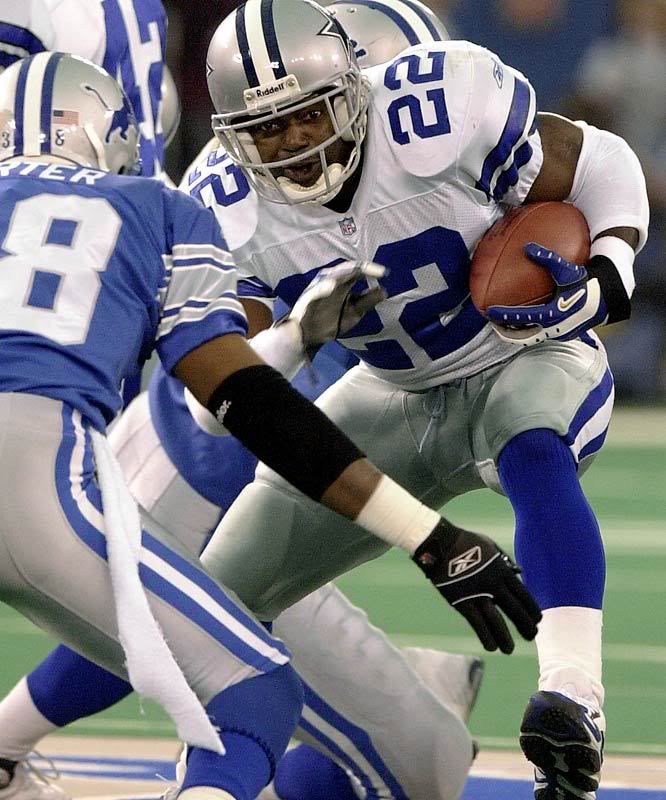 |
| Helps to have guys like this at tailback! |
In summary, a lot of I formation teams have moved on to the spread, for various reasons, and haven't forgotten their roots. There are still some teams that have kept the I as their base, and without a doubt, the I is a very simple offense to install, that has limitless possibilities.
Split Back Veer
The Split Back Veer (SBV) is an offense that has been around since the Houston Veer days and has really been kept alive by the success of Carson Newman University. However, you still don't see many SBV teams (In the past six years I've faced one, one time in the playoffs). I must admit, when run well, the SBV offense is a beautiful thing to watch.
Why
Reading people and not blocking them is always easier! Most option coaches agreed to this statement wholeheartedly. Being able to run a large variety of options such as midline, inside veer (ISV) and outside veer (OSV) are also big reasons to run the SBV. The added fact that installing a pro style of run game with isolation, power and trap at your disposable adds to the destructive power of the SBV offense.
Why Not
Option quarterbacks (QB's) do not always grow on trees, and when running an option oriented offense the QB is the focal point whether you like it or not. Most SBV coaches agreed that in years where they were grooming young QB's or QB's who struggled to make their reads, records suffered. Turnovers can also be a major limiting factor to why somebody would want to run the SBV. Most option offenses do have a tendency to have higher turnover ratios that more traditional offenses do. The versatility of the RB's was another issue many SBV coaches talked about. Both halfbacks (HB's) have to be able to run inside the tackles, lead block, and run outside in order to fully open up the offense's potential. Lacking one of these traits can severely limit the SBV offense.
In summary the SBV offense is not for everybody. I takes a ton of discipline to run this offense, as does any option oriented offense. The major benefit of SBV over other option offenses is the ability to leave the option for a more pro or traditional style run game whenever needed.
Wing-T
The Wing-T has many versions, but for the purpose of this post, I've lumped them all into one category here. I'm sure that will tick off many a Hybrid Wing-T coach, and my apologies to all the Wes Elrods out there!
Why
The number one reason for the coaches choosing the Wing-T was deception. The offense keeps defenses off balance by the use of deception with backfields that criss-cross and traps and counters galore. The lack of the need for a great feature back was also a big plus for all Wing-T coaches interviewed. Also, the lack of a dominant OL was considered by many a huge factor when choosing the Wing-T as a base offense. With the advent of the Shotgun Wing-T, now the offense has been opened up even more than its predecessors. Another good reason for selecting the Wing-T is that your QB does not have to all-world or even have a great arm for that matter.
Why Not
If you don't have a couple of guards that can run and block in space, you need to look elsewhere. Most Wing-T coaches agreed, the guards make that offense go, and without a couple of guys that can pull and block in space, the offense becomes bogged down with little options to go to in order to help alleviate the problem. A lot of Wing-T coaches also agreed that a good TE was needed to really stress defenses. The TE side of the offense gets a lot of the run game, so the need for a blocking TE is a necessity. The TE can also hurt defenses in the playaction passing game as well, so the need for a versatile TE was very popular amongst Wing-T coaches interviewed.
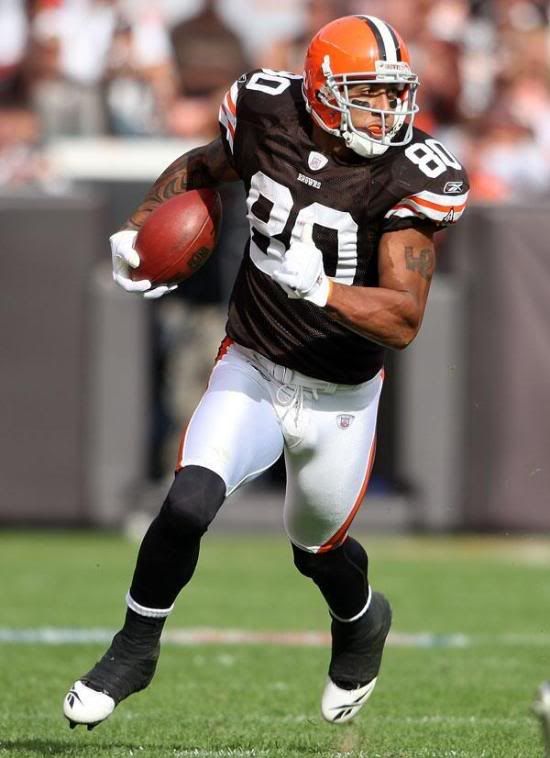
In summary, the Wing-T is as old as the hills and is very popular in high school football (some in college if you look at what Gus Malzahn does). You need some pulling guards and a decent TE to really be able to do damage with this offense, but the lack of specialization has many coaches going to this format of offense.
Double Wing
The dreaded Double Wing (DW) offense has been at the heart of many turnaround stories, yet is still not all that popular of an offense. Most coaches look down their noses at an offense that doesn't spread the field anymore than the DW does, however, those that run this offense swear by it, and here's why.
Why
No need for a dominating OL. With foot-to-foot splits and a large portion of the blocking scheme being angle blocks and double teams, the OL does not have to be this massive road grader that each player can move defenders at will. Most DW OL are not very big, but they do get the job done. You also don't need Peyton Manning to QB the DW offense either. Since this is a run oriented offense, the QB is merely your manager of the game, which is also a quite appealing factor to the DW offense.
Why Not
You won't go far without a fairly dominating FB, or wingbacks (WB's) that can block. The FB gets a large bulk of the carries in the offense and is asked to do some blocking, so this player needs to be pretty good in order to help make the offense be as potent as intended. WB's that will not block can hurt any offense, but the DW having two of these guys that won't block, or struggle blocking is a no-no. Also, a lot of DW coaches, or coaches who had run the DW offense, said having a QB willing to do more than just hand off was a must. Many coaches rely on the Super Power Sweep and other run plays that involve using the QB as a lead blocker. If you have a pre-Madonna QB, this might not be the offense for him, or your team for that matter. Lastly, the lack of the down field passing game has scared away more than one coach on occasion. Most DW coaches would argue, you don't need the vertical passing game because playaction is usually so open, and I would tend to agree.
Without a doubt many folks claim the DW to be contrarian, however there are enough successful programs running it for me to disagree. The need for a solid FB a tough QB and some good blocking WB's is not enough deterrence, in my mind, to outweigh the advantages of running the DW offense.
Flexbone
We all know I like the Flexbone, but the "original spread offense" does have some drawbacks. Still, there's nothing better than kicking back on the couch on a Saturday afternoon and watching Navy and Georgia Tech. giving people fits running the vaunted Flexbone Triple Option Attack.
Why
As with any option offense when you can read them and not block them you are opening up a whole load of positives. The lack of a need for a dominant OL is another reason, since there are double and triple teams designed at the point of attack (POA) on most option plays. Not needing a true "feature back" as some offenses do is also a plus in many coaches minds. With the potential of four guys getting the ball on any one play, it becomes very difficult for defenses to just "tee-off" on Flexbone teams. Having an option offense centered around a vertical based passing formation is also a plus. Sure, very few Flexbone teams are known as great passing teams, however you have to honor any offenses ability to throw the ball when they line up in the Run-N-Shoot base formation!
Why Not
In Federation governed states, the inability to cut block on the perimeter of the offense is much akin to giving an alcoholic Odoul's. Why it tastes like and smells like beer, it ain't the real thing! Watch Navy or Georgia Tech. and you will see perimeter defenders fighting to stay on their feet on every play. Losing this aspect has really hurt the transition of this offense from college to high school. The QB and FB are two major components that if lacking in any one of them can severely strain the offenses ability to attack all areas of the defense. Having a QB that struggles making the reads, and making them coolly can effect the offense drastically. Slots that will not block or are not good blockers on the perimeter can limit the offense as well. When these players can cut, the lesser athlete has the upper hand, however with an inability to cut in most states, these slot backs have to be decent blockers in the open field, or the offense simply will not function properly.
I am biased here as I think the Flexbone is the ultimate option offense, however without the a good threat at QB and FB, you really can see the offense fall off. Also, the inability to cut down field has greatly reduced the Flexbone's presence at the high school level.
Spread
Wow, what do we mean by spread? Yes, I know there are a myriad of offenses called the "Spread", however I'm talking about any offense that is 1 back, or empty and comes in two distinct varieties. You have the spread to run, and spread to throw offenses. I know, there's Air Raid, Tony Franklin, Gus Malahn and Dan Mullen spread offenses out there, but they all do have some things in common, so hear me out.
Why
Puts athletes in space, and makes the defense defend the entire field. How many times have we heard that? However, when interviewed, most spread coaches made this statement and it is so very true. Unlike the DW or Wing-T offenses where a defense can gang up and but eight, nine or even ten defenders in the box, the spread does not allow for this. The defense must move defenders out to cover the split receivers or risk being outflanked. How many defenders is also always a question. Do you go for a full three on two, or four on three advantage, and reduce numbers in the box, or do you keep box players closer to their assignments? These questions are asked by defensive coordinators (DC's) daily. Not having to have a feature back was another positive for most spread OC's. Sure, having a RB that can stress the defense is a must, but not a necessity. The added danger of being able to run simple option plays such as zone read, dart, midline and ISV have made the spread even more dangerous in recent years.
Why Not
Gotta have a QB. If you are going to parade around in a passing formation, you eventually are going to have to show you can throw the ball. Even if it's just screens or three step passes, you need to keep the defense honest by being able to throw the football. If you have a QB that can't do that, or doesn't do it well, then the defense can simply go back to loading the box and stuffing your run game. Also, if you are a spread option team, look under the Flexbone section, the rules also apply for spread option QB's as well. These guys must be able to make these decisions in a split second and be correct at least 70 percent of the time, or else the offense will be hampered. The need for an offensive line that is versatile is a must as well. Spread OL's, whether they be spread to run, or spread to pass, must be very versatile. Wing-T, DW and Flexbone OL don't have to be great pass protectors due to playaction being a large part of their passing game. Many spread teams don't base off the playaciton pass like other offenses do, so having an OL that can protect the QB, but also open up holes in the run game is a must. Another huge component, often overlooked by coaches making the switch to the spread is the need for athletes on the perimeter of the offense. Many coaches feel that they can hide a weak OL by being spread and using a lot of screens to get the ball out of the QB's hands quickly. This works if two things are present. First the receivers in your offense must be good at blocking, because there's nothing worse than running a screen for a two yard loss. Second, the athletes you are throwing the ball to, need to be able to do something with it once the ball is caught. If your best receiver runs a 4.9 forty time, in a league of 4.5's at DB, you might want to reconsider your choice of offense. For those spread teams than use 11, and 12 personnel, the TE is a critical position to find. Having a TE in the spread can really create match up issues for the defense, however, not having a threat at TE can be just as dangerous. Also having a TE that can run and pass block was many coaches key factor to determining what their base personnel would be that year. One coach I talked to made the comment that in years they had TE's they did more 11 and 12 personnel stuff and when they didn't have these players they went to more 10 and empty personnel formations. Lastly, having a center who can consistently make a shotgun snap is a must for those spread teams that choose to base out of shotgun formations.
Basically put, the spread ain't for everybody. You need a decent gunslinger at QB and an OL that is pretty versatile. Many teams are going the way of the spread, but probably too many are finding out it's not their cup of tea. If you have the components though, this offense is the hottest ticket in all of football.
Single Wing
The Single Wing (SW) whether balanced or unbalanced is an offense that many coaches claimed died 30 plus years ago. However, there are many coaches, who would argue that the offense didn't die, it simply went underground to get some major improvements.
Why
The number one reason SW coaches said they ran this offense was the lack of a need for a true QB. Since any one of the RB's in the SW offense can throw the football, the need for one pure passer becomes obsolete. Several coaches FOUND the SW offense by not having a QB and switching to the offense to give their kids a chance to compete. Running a close second behind the first reason to run the SW was the lack of a need for a dominating OL. Similar to the DW in these regards, the SW uses a lot of double teaming and down blocks which don't take are great amount of skill or strength to execute. Deception is another major reason to select the SW offense as your vehicle of choice for attacking your opponents. There is no single more deceptive series in all of football than the spin series in the SW offense. One coach even remarked that the SW offense was the most deceptive offense in all of football. Lastly, simplicity of the offense and ease of install was listed by many coaches I talked to. The offense is not flashy, and even so, it can be deadly when run properly.
Why Not
The reason here is similar to the Wing-T in that you need at least two players who can move and block in space. The pulling guard, or power guard as some call him and the blocking back (BB) are two players that are at the heart and soul of most SW offenses. For those that ran the unbalanced version of the SW offense, the need for a dominant blocker at the outside tackle was sometimes mentioned also. The need for a good center who can make all the snaps needed in the SW offense was also a concern amongst most SW coaches interviewed. The center need not be a great or dominant blocker, yet he does have to make a wide variety of shotgun type snaps in the SW offense.
The lack of a vertical passing game and the need for two mobile blockers are not enough deterrence to the "lifers" when it comes to the SW. SW and Flexbone both are almost "cult-ish" when it comes to their offensive style.
Obviously not all offenses fit into the neat little boxes I've put them in. This is just a somewhat comprehensive list of some popular offenses that I sought out coaches to talk to. Obviously there are many, many offenses I did not list. I looked for the most popular ones, and talked to those coaches as I didn't really want to deal with anything "contrarian". Anyhow, just some side research I was doing over the past few months, thought I'd share. Season is upon us, no time like now right?!
Duece