Showing posts with label high school football. Show all posts

Friday, January 10, 2014

Some General Thoughts on Defending Spread Tempo Offenses


Well, now that the bowl season is finally over, and I have almost completely overdosed on watching games, I must say I do have some thoughts on what I have seen defensively.  Now mind you, this is purely observational, and not stitch of what I'm talking about or illustrating has been confirmed with film, so basically this post is me bullshitting with you over a couple of beers at the local pub.  Now that we got that out of the way, let's look at my thoughts on what I viewed over the bowl season.


  1. There is no, and will never be any, substitute for fundamentals.  The teams that did the best job on defense not only tackled well, but tackled well in space.  They fought off blocks, reacted well to schemes, made reads and utilized very good footwork and technique.  The biggest skills by far is coverage footwork and transition and tackling.  
    1. Tackling- The spread schemes have an inordinate amount of ways to get players out-leveraged, out-flanked, and just generally in a bad position to defend whatever play is being run at them.  The packaged plays concept, along with multiple formations, reads and options being utilized has made many a great athlete look silly whiffing at air.  Good teams tackle, but great teams tackle with a purpose...EVEN IN JANUARY.  I don't give a damn what time of year it is, you must tackle.  I do tackling drills everyday during the season up until about games five or six, then I taper off, but even if I'm in the playoffs we are tackling once a week and still doing form/fit drills everyday.  The hardest thing to recreate as a defensive coach is open field tackling, but it MUST be done if facing these types of offenses on a regular basis.
    2. Coverage footwork- The good teams have not just had spectacular athletes in the secondary, they've had great technicians in the secondary.  A DB has got to be a master at his craft.  This was no more evident in the BCS National Championship Game where Chris Davis in the beginning of the game used poor footwork on underneath routes to allow a couple of easy first downs.  Later, Davis (yes, I'm being critical of him) made huge error in the way he played the ball, receiver and the route on the pass interference call that led to him making the most critical error of the game (which had nothing to do with fundamentals).  On the goal line, playing in man coverage Davis aligns head up, yes HEAD UP on Kelvin Benjamin and allowed the big 6'5" receiver to body him up on a slant route in the end zone for the game winning touchdown.  Facing spread attacks requires that DB's have meticulous footwork and they must be able to play the ball in the air well.  This was never more evident than vs. one of the best defensive back coaches in the country than Nick Saban himself.  Saban's DB's time and time again found themselves in poor position because of poor technique.  Now, I will agree, there were some mismatches.  As one person put it, some teams just don't match up well against others.  May not mean one is better than the other, but the end result is the same.  The match up issues led to technique breakdown, and well, you see what you got.  The same could be said of Texas A&M's DB's or Baylor's.  
  2. Schematically, I honestly feel man to man coverage HAS to make a major return to college football.  I know "living" in man, is not for the faint of heart, but even the match up zone coverage gurus are going the way of pure man on even their zone pressures.  Three-by-three zone blitzes are going back to the old grass roots man free blitzes of yesteryear, but with better eye control and leverage setup in the general attack of the blitz itself (blitzes must really be option centered now or spread option offenses can seriously gash your defense).  Man free and Cover Two Man have to make a comeback, at least until the time being.  I mean, hell, let's be honest, even Saban's version of Cover 3 (Rip/Liz) is basically man free.  Man to man cuts down on the amount of open grass receivers are allowed to attack, and not going pure cover zero all-out man allows you to have a match up problem with help over the top or trailing help underneath.  
  3. Zone coverage is not dead however, but must be disguised, which leads me to my next point that the defenses intentions MUST be disguised.  From blitzes to stunts, to coverages, EVERYTHING must not appear as it seems.  The QB is not the only cat you have to fool either, the offensive lineman are the keys you must really fool.  I'm really surprised at the lack of amount of stemming you see defenses doing these days.  Stemming is easy and can be added to any call.  Regardless of tempo, most offenses at least take a second to look over the defense pre-snap, this is when you shift, then shift again.  Build in good hard fast rules too for when caught in a shift.  I always tell my guys when caught, keep working to your gap, don't stop and smell the roses and more importantly DON'T PANIC!!!  Disguise is a must because offenses have become so successful at reading a defenses' intentions and then changing the play, gashing the defense, aligning quickly and doing it again.  This disguise can help slow down the up-tempo schemes of today by making the offense have to reset or "re-audible".  
That moment when you realize this was a poor disguise...

    1. More to elaborate on disguise, one thing I liked was how Missouri would show 1 high coverage, then rotate pre-snap to 2 deep, or even, rotate the deep safety down and down safety deep.  I was amazed watching a defender, aligned 5-6 yards off the ball, bailing before the snap to become the MOF defender.  Some of the coverages looked like zone, but some were also man free as well.  I thought the idea very ingenious because you rarely see one high, MOFC coverages morphing to two high, or better yet, rotating much in the way a four-spoke secondary would.  These types of adjustments must be made.  In other words, make the unordianry, ordinary.
  1. Obviously pressure must be a consideration when facing these types of offenses.  I think pressure for pressure's sake is not a good mantra however.  I think you have to the standard stuff of evaluating protection schemes, QB strengths when pressured versus when not pressured, run pressures versus both gap and zone schemes etc.  The no huddle presents some issues with pressures in that they must be simple, so they can be signaled in quickly.  These pressure packages must be dynamic so they can adapt to the myriad of formations, shifts and motions that your players may see.  Making your pressure packages multiple, but simple is key.  A backside twist added to a field dog blitz is an easy adjustment, but must be communicated and taught as such.  I think being able to "tweak" a pressure with such nuances is very important in being able to give an offense multiple pressure looks throughout the course of the game.
  2. Anti-pressure is another schematic theme that I think defensive coordinators, especially at the high school level should embrace.  Several years back I was facing a very good running QB, with some highly talented receivers (one is entering this year's NFL draft).  We had no answer in our base 4-3 package.  I stole an idea from good ol' Gus Malzahn and utilized a three man front where I simply changed out our 3 technique for another linebacker and played my traditional Mike linebacker about 8 yards deep so he could drop down the middle in a Tampa 2 look.  We went into that game with 4 pressures, 3 zone and 1 man.  We were a 24 point underdog and only lost by 11, confusing the hell out of our opponent with this look.  Now we ended up down by 21 at the half, because as the score got further out of hand, I kept bringing more and more pressure, which led to mistakes, and our players feeling like they needed to press.  In the second half, I called a man blitz, our safety slipped covering a dig route and we were down by 28.  After that I simply quit blitzing and dropped eight into coverage.  On the first possession they threw a pick that led to us scoring.  Second possession we forced the first punt of the night.  The less we pressured, the worse their QB played.  What was happening was we were reducing the size and number of windows this young man had to throw through.  What he began to do then was tuck and run when he got nervous about throwing a pick.  So we quit rushing our Nose, and let him and the stacked Tackle spy the QB.  This made things more and more frustrating leading to two more second half turnovers.  My point is this, don't always think you have to put the pressure on the QB by rushing him.  Sometimes it's better to put the pressure in front of him with coverage and a minimal rush.  I've actually done this more than once, and had it work quite well on more than one occasion.  I think DC's don't need to get caught up in drawing up these wide arrays of blitzes that send safeties and drop tackles etc. just for the sake of trying to sack the QB.  If you are having trouble getting to him, my answer would be, then make him have trouble finding anyone who is open.  What bigger waste of a player than having five offensive linemen blocking two or three defensive linemen, while the other eight or nine players are in coverage, confusing the QB?  I know it's contrarian, but think about it, once I made the leap, the dropping eight or nine has been a part of my spread defense package ever since.
3 man front 4-3 personnel Tampa 2 coverage

    1. Also to note, this past season, because we had kids that were so new to doing what I was asking them to do, I kept it quite simple.  If we added a "drop" call to any coverage call, that told the tackle (three technique) to drop on passing plays to the low hole zone.  Allowed us to play coverage with our Mike linebacker a bit different, and also allowed us to play our quarters scheme with an extra underneath zone defender allowing the outside linebackers to get to the flats quicker.  Again, just thoughts on paper, but knowing some body's tried them and had success with them sure helps.  
Drop call given to 3 technique

  1. Brophy had mentioned this before, but developing simple defensive concepts that can be communicated effectively and quickly are going to become more and more the norm in at least college football.  I think high school coaches have a bit of time on their side before we see the tempo of the college game, but it looms in the very near future.  None of this was more evident than when Alabama played Oklahoma.  Oklahoma, who throughout the year had done some tempo, wasn't anywhere near the Oregon's or Texas A&M's in terms of playing speed or number of plays, however with the break, and what Stoops knew about Saban's defense, they obviously worked on it and exploited it.  I may make a bold prediction here, but Saban's days may be numbered due to his inability to adapt.  He's had two years now of dealing with both Texas A&M and Ole Miss, both of which operate at high speeds and he's had trouble with these.  That's because Saban, like all of us, likes to be right.  Many a master craftsman wants his hands in everything, and it takes those of us who pride on using our minds to stop our opponent to a dark place when we have to rely only on fundamentals.  However, that is where the game is headed.  Fundamentals, who at some point in the collegiate game had taken a back seat to scheme, will now prevail (as it should).  If Saban doesn't adapt, as other college coaches, it could get ugly for them and ugly in a hurry (no pun intended).  Saban himself, along with Will Muschamp have already talked about scrapping their time eating offenses for the more glamorous no huddle, speed-in-space, up-tempo offenses.  
    1. Where this takes defenses is they are going to have to educate the signal callers on the field even more so than before.  The signal callers are going to have to work in a way that they are essentially the coordinator on the field and get the defense in the right front and coverage in a very short amount of time.  The problem with this, as with defensive football in general is that it is reactive, where the offense is proactive.  Sure they have to snap the ball, but even if they aren't right all the time, a short throw to a great athlete that's well covered can still turn into six points.  The defense has this to worry about, and then having said short throw (could be a run, just using the short throw as an example), NOT be covered due to a bad pre-snap read, and it also turns into six.  This is where the teaching responsibility lies with the coordinators and their ability to put their scheme inside the head of a 20 year old.  In the case of high school, sometimes that guy may only be 15!  
What I drew on a napkin from Missouri game, no DVR, so may not be 100% accurate, but you get the gist.  

These are just some of my general notes I've basically jotted down in my phone, or on a napkin as bowl season unraveled before our eyes this season.  I think we could easily be five to six years off before defenses really "catch up", and I use that term lightly because defensive football is behind the eight ball already as the game is designed to be entertaining, and a nine to seven ballgame isn't really appealing to the average fan.  I also agree with Brophy on his new standards of measuring what a good defensive outing will be in the near future.  I think the time is gone where you see shutouts, or very low scoring affairs.  For those of us who are "defensive minded" this may be an issue, but it's like anything else, you either adapt, or you die.  


I'm thinking very seriously about working on a collaborative effort to look at this more closely.  I have contacted a couple of other bloggers about this, as I think it was our readers would want, and could greatly use.  If you have any suggestions or comments, shoot me an email or hit me up on Twitter @FootballIsLifeBlog.  Hope everyone had a great holiday, and is ready to hit the off-season in full stride!

Duece

Thursday, October 31, 2013

The Passing of A Great One


Haven't had much time to write, but I wanted to share this one for sure.  My former head football coach, Dan Haley has passed away.  Haley, like many other coaches, was more than just a coach.  He was a father figure, mentor, and life-long friend to anyone he ever coached.  I had the pleasure of both playing under and coaching for, Coach Haley in the late 90's.  I learned a lot about, not only the game, but about how to treat players, and that a coach can give his players so much more than X's and O's.  Coach Haley, who has a very impressive record to say the least, was even more impressive when he was doing what he did and loved best, mentoring young folks.

When I first met Coach Haley, I had no clue what to expect.  He was a large man, but very humble looking, and then he spoke.  He had this booming voice, and he enunciated everything with perfection, despite having that traditional Kentucky drawl.  I've had several football coaches through the years, and worked for several others, but Haley was a guy that didn't speak at you, he spoke to you.  He deeply cared for his players, and he made that known, right up front.  He made no bones about the fact that you were his players, and that he was going to do everything within his powers to not only make you a good football player, but help to make you a good person.  I always liked that, and a lot of my coaching nowadays reflects that same dedication that Coach Haley gave me.


Some things Coach Haley taught me as a player were the triple option, to be detailed in your preparation for your opponent, the way defenses defend offenses, and how to properly execute a trap and a log block from the guard position.  There were countless other items he taught within the scheme of the game, but these I remember the most.  He was very no nonsense in his approach to the game, very business like.  There was time for fun, but when he was teaching, it was all business.  I liked this very much about him, as his professionalism was unparalleled by any coach I had before or since.  I liked the way he made me feel like I didn't want to just play for him, myself, or my teammates, but the fact that he taught us to go out and be the best it is at whatever is being asked of us.  It didn't matter if you were a scout team linebacker trying to give the offense a look, you go out and you do that to the best of your God-given ability to help the unit as a whole, and because that is how EVERY man should embrace EVERY task he's faced with.  This has stuck with me through the years, so much so, that I even just used it yesterday when talking with our third string quarterback about his lack of motivation.  Anyhow, Coach Haley taught me an awful lot on the football field.  I remember him taking over an hour to show our quarterbacks how to take the snap from center and to step properly on the inside veer play.  I truly credit my love of triple option football to Coach Haley.  He was an absolute master of it, and knew exactly how it should be run, and knew exactly what needed to be done to adjust it when it wasn't working.


Off of the field, Haley was a man who could talk your ear off about anything.  He loved when players would come by and see him in the off-season.  He'd talk til' you could'nt stand it anymore and then talk some more!  I always was ready when he sat down to tell a story, or just shoot the breeze.  I knew that hidden somewhere in his talks, was a message.  Every time he opened his mouth to talk to young people, there was a purpose to it.  I remember our running back, after getting a big first down run against our rival one year, jumped up and flexed his muscles, almost drawing a flag.  Later, on the next week, after we won (of course) and our coach was reviewing the film of the same run and stopped the tape (yes, it was tape back then) and said "<> was that really necessary?".  Our running back looked down, and then back up at coach and said "No sir, I was just in to the game and happy we got the first down".  Two plays later he fumbled on the 14 yard line, and again, Haley turned to the running back and said "Son, this is why you don't do what you did two plays earlier.  You need to learn to be humble.  Being humble is one of the greatest skills anyone can learn in life".  With that, he proceed on with the film.  I never saw our back draw attention to himself again the rest of the season.  He did fumble a few more times, but he didn't make the focus of the game on him, and again, that really stuck with me over the years.  When a player scored a touchdown, there were no end zone dances, you simply handed the ball back to the official and went to celebrate with your team.  Team was always important to Coach Haley, he was completely about it, and totally committed to making the team his and every body's main focus.  


Haley was also very, very detail oriented.  Me being an OCD cat like I am, took to this with earnest.  He was ALWAYS prepared.  I NEVER once went to a meeting, practice or film session and saw him unprepared.  I came in one time, as a young coach, who's job it was to break down the kickoff and kickoff return teams for our opponents, with nothing in my hands but a blank notepad.  He gave me an off stare at the beginning of the meeting, but that was Haley, he always did things like that.  When the meeting got to my part where I was supposed to get up and show what I'd learned, he stopped me about halfway through me drawing on the grease board and said "How do I know this is what they are going to do?".  I turned and said, "Well coach, I've watched three films and this is what they've lined up in every time".  To which he replied, "I know you know it son, but you haven't given us anything to look at.  All the other coaches have printouts for me to look at, what did you bring?".  I said "Nothing, coach, just my notepad."  He looked at me and told me he noticed it was blank and was wondering how I remembered all the stuff I'd watched on the film yesterday without writing it down.  I told him I had written it down so I could commit it to memory, which he liked, but didn't care for the fact that I didn't bring it with me.  After an awkward five minute exchange he let me continue with my presentation.  I felt humiliated, especially being the youngest coach on the staff.  I took a hell of a lot of ribbing anyways, but this was worse, this was the boss!  After the meeting he asked me to stay for a minute.  I just knew I was fired and hadn't been on the job but three months.  That wasn't Haley though, he saw a moment he could teach a young coach something and he used it.  Even with his busy schedule, he stopped and took 10 to 15 minutes out of his schedule to make me a better coach.  "You need to go into any endeavor you go in to, prepared.  When you come to a meeting next time, I expect handouts and notes.  I don't want any chicken-scratch either, I want nice illustrations and good notes on what information you are presenting."  The next week, I was on, I had handouts and a ton of data on my part of the game plan.  Once the presentation was over, even the old salty defensive coordinator came up to me and said "good job".  Again, Haley stopped me after the meeting and he looked me in the eye and said, "Way to take coaching son, good job", and turned and walked away.  He had that impact on you though.  I've never been unprepared for another meeting for the rest of my career, and I've been called "detailed", "OCD", and a "mad scientist" for my over-the-top attention to detail approach, but I will not change.  If Haley wanted it that way, and he coached me to be that way, then that's the way I'll be!

Yeah, that's me...

The part I really regret about writing this, is the fact that after I left coaching for Coach Haley, I never saw him again.  It's been 15 years since I've seen those glasses looking at me out from under that all-too-familiar skull cap he always wore to keep his bald head warm.  I really regret that.  I called him when I was interviewing for my first head coaching job and got him to send me a letter of recommendation.  With it, he attached a book he'd written, entitled The Difference Between Winning and Losing, of which I plan on sharing with you once the season is over.  He told me to read it, before I took my first job.  However being right up at the time of the deadline to apply for my job, I didn't get to read the book.  I actually didn't read it until after I got fired.  I sure wish I'd have read that book, I wouldn't have even applied for that first head coaching job.  The book is full of Coach Haley, and his perspective on the greatest game ever invented by man.  As I stated earlier, I plan on rereading it this off-season, and sharing with you some things I've taken from it, that will hopefully make you a better coach yourself.

If I could get one more chance to talk to Coach Haley, I'd thank him for helping make me the coach, teacher, and most notably the person I am today.  Coach Haley had a profound impact on my life and he will be missed by countless others.  Again, thank you Coach Haley for everything you did for me, and I promise, to stay humble.  See you over the goal post coach...


Duece

Friday, June 7, 2013

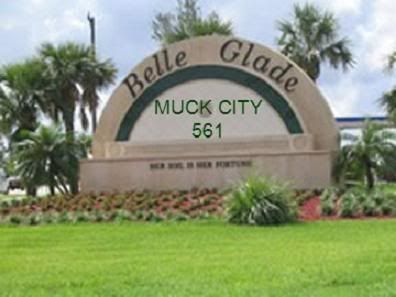
Muck City


Since taking some time off at the end of spring football, I had a dear friend deliver me a gift.  A copy of a book about football in a town like no other.  That town is Muck City, as the book is titled, or better known as Belle Glade, Florida.  Reading this book was an eye opener to the way of life in Belle Glade.  I have coached teams that have played in that area, and even as a player played teams from over there.  Never did I know what went on in that area in terms of the history of not only the town, but also the football program.  This is no Odessa Texas, or De La Salle by any stretch of the imagination.  This is one of the roughest, poorest towns in all of America.  It's literally like driving into a third world country when you go there.  One thing they do well there is play football.

For those that don't know, "The Muck" is the area around Lake Okeechobee, that boast some of the most fertile soil in the world.  However, as much as the land grows, the townspeople taketh away.  In reading this book, it is amazing the despair, and the jealousy that abounds in a town like that.  One bothered me the most was how when an athlete would "make it", others would try to pull him down, or resent him to the point that many folks felt this star athlete "owed them something".  I can remember a quote from a movie, talking about people leaving poverty stricken areas and talking about the people there as "crabs in a bucket".  When one crab makes it to the top, the others will climb on his back and pull him back down into the bucket.  What's weird to me is, this is NOT the American way.  How does one even think like that?  I guess I'm wired differently, but the crabs in a bucket analogy, one I thought was just a joke, rings true throughout every ink laden page of the book Muck City.


The author, Bryan Mealer, does an excellent job in the telling of football history, daily life, and overall town history of Belle Glade.  He is very detailed in his accounts, and you can tell he spent quite some time living and working in Belle Glade.  My hats off to Mr. Mealer for writing such a quality book.  The historical parts drag you back to a past that talks of hurricanes and floods, the beginnings of a rough town carved out of the Everglades on the southern border of pristine Lake Okeechobee.  He also does an excellent job talking about the football history, even going back to when there was segregation and two schools in the tiny town.  The best part is when he describes the games themselves, or being at practice.  Mealer does such a good job, as a coach, I think I'm sitting right there with Jesse "The Jet" Hester listening tell the players much needed life lessons.  You actually get tensed up and nervous in the parts about the games, because of Mealer's attention to detail when describing them.  Mealer even knew the play calls and talked about the game as though he were a legendary coach himself.  Again, I have to tip my hat, because Muck City is a very well written book.


The part that hit home, and bothers me the most is the fact that a football coach, such as Hester, who went 34-6 at his time at Glades Central High School was fired six days after appearing in his second state championship.  This man had brought a sense of stability to a storied program, he'd make the young men believe in his coaching staff, and more importantly, believe in himself.  Only to have a community, one who I'd think would eat their own young if they had to, tear the ground out from underneath him.  Again, crabs in a bucket.  It is through a book like this, that you finally realize that "misery loves company" and people in despair are that way by choice, not because of some unseen force, or a greedy capitalistic society hell bent on keeping the poor man down, or even by politics.  These people are where they are because they do not have the intestinal fortitude to get out of their current situation.  It's sickening to read chapter after chapter of players who get out of Belle Glade, only to be ridiculed, made fun of, or even berated to the point of some never wanting to come back and help out there hometowns folk.  Who does that?  Having not lived it, I can tell you maybe I'm just some snooty outsider who doesn't have a damn clue how things work there, but I'm telling you, there are far worse places in this world that some of our great leaders, athletes and politicians have come from.  If they can do it, so can somebody from Belle Glade.


I don't mean to talk harshly about the town, but to be honest, the nature of things there are anti-American.  To embrace despair, show jealousy, and downplay the success of others is not what we were founded upon.  The one thing is true, some of the absolute fastest of the fastest football players come out of this region.  Great names such as Fred Taylor, Jesse Hester, Reidel Anthony, Rickey Jackson, and Anquan Boldin just to name a few.  The statistics of NFL players that have come from Belle Glade is staggering.  Another disturbing notion in the book is how players nowadays feel entitled to this treatment as though they are gods and all they have to do is "show up" to be recruited.  The game, in the book, takes an ugly feel to me.  It's not longer a game in Belle Glade, yet a means to an end.  This fact, is starting to branch out all across America I'm afraid.  What used to be a game among young men, is now a pipeline to money, fortune and fame, and it was trickled down into even our youth programs.  I have coached football long enough to see this demise and it is steadily withering away at my love for the game.  Coaches, especially head coaches, are now looked upon to facilitate the recruiting process, and severely scrutinized when the process breaks down or the athlete being recruited simply isn't "good enough".  The pages of Muck City echo this sentiment, even more than I imagined.

I recommend anyone read this book, but be prepared for an eye opener.  I may simply be so naive that I've been holding on to the game, trying to look at the landscape through glasses meant for an earlier time, and this book as slapped these glasses off my head.  I look at the game and wonder..."what am I doing here?".  I have seen this entitlement change drastically over the past four or five years, and like many I have thought it just a phase, but I'm afraid folks it's here to stay.  Several parts in the book have interviews with old war hero's from decades past that talk about the new wave of football players with great concern, and even some disdain.  For years I've heard even the old greats around my area talk the same way, and often chalked it up to "they don't understand kids", or "they're just too old to understand", but more and more I'm beginning to believe these old timers and what they are saying.  I guess that's because I'm becoming one of them.  I see what's happened to our game and the players in it, and see how the money has crept in and made everything about a once beautiful game ugly.  Everything has a peak, an apex if you'd say, and I think football is on a downward slope from it's once grand mountaintop.  I may be a lone voice, but football, much like our country, is crumbling from the inside-out.  The very foundation us as coaches preach has slowly been eroded away to where the whole thing stands to collapse.  I mean, read the sports columns everyday and you see where somebody or some team is getting slapped with a violation of some rule.  There's a fine here a fine there etc.  You can also read the high amount of arrests in both the NFL and college and now people turn a blind eye to it, as though "It's ok, he's a football player".  To this I say bullshit.  A case in point is the Tyrann Mathieu, better known as the Honey Badger, is now on the Arizona Cardinals roster, simply because "he can play".  He was arrested in possession of marijuana and failed numerous drug tests, but because he "can play", he gets entry into what is supposed to be the most hallowed fraternity in all of football, the NFL.  Am I the only soul in America that sees this logic as flawed?


I watched a program on Lombardi last night, and Jerry Kramer, legendary guard for the Packers said these words "They don't make men like that anymore", when talking about Lombardi.  I was thinking, you know, he's right, they don't.  These men are shunned as "old school", and tossed out and away from the game because players don't relate to them.  Players don't relate to them because they want everything handed to them, and the only thing Lombardi would hand you is a swift kick in the ass if you felt entitled to ANYTHING!  I often wonder what Lombardi would say if he could gaze upon the landscape that has become college and pro football.  My thinking is the famous line of "What the hell's goin' on out here!!!" would come to mind.  All I can say is, he would be gravely disappointed in us for what football has become.


Like I said, buy the book, it really speaks more volumes about football in general than probably Mealer knows or intended.  The book is a great look at football in a dark corner of America, where there are few fairy tales and even fewer happy endings.

Sorry I've been gone so long, but the new gig has me off and running, we have already started our summer stuff, but hopefully I can get some of these archived articles finished up and posted.  Have patience with me!


Duece